Rio de Janeiro, Brazil

God made the world
in six days.
The seventh, Rio.

Urban Tales is a GPS audio guide app that narrates Rio de Janeiro's hidden history, legends and secrets automatically as you walk — at your own pace, with no tour group to follow.


Walk up to a landmark.
The story starts.

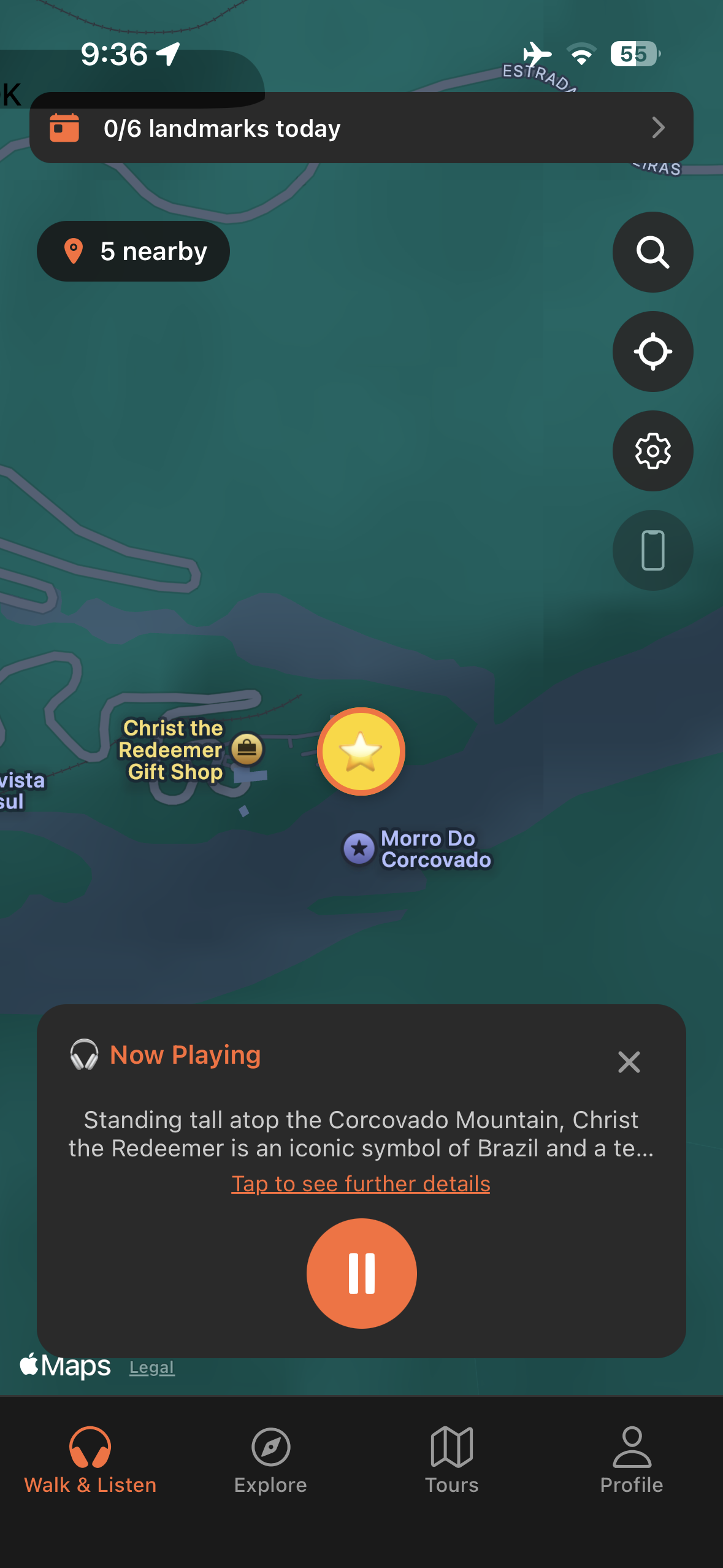
No tapping. No searching. Urban Tales detects your GPS position and plays audio automatically the moment you're close enough. Put your phone in your pocket — just walk and listen.

Urban Tales GPS map in Rio de Janeiro with audio story automatically triggered

GPS triggered. Audio starts the moment you arrive at a landmark.

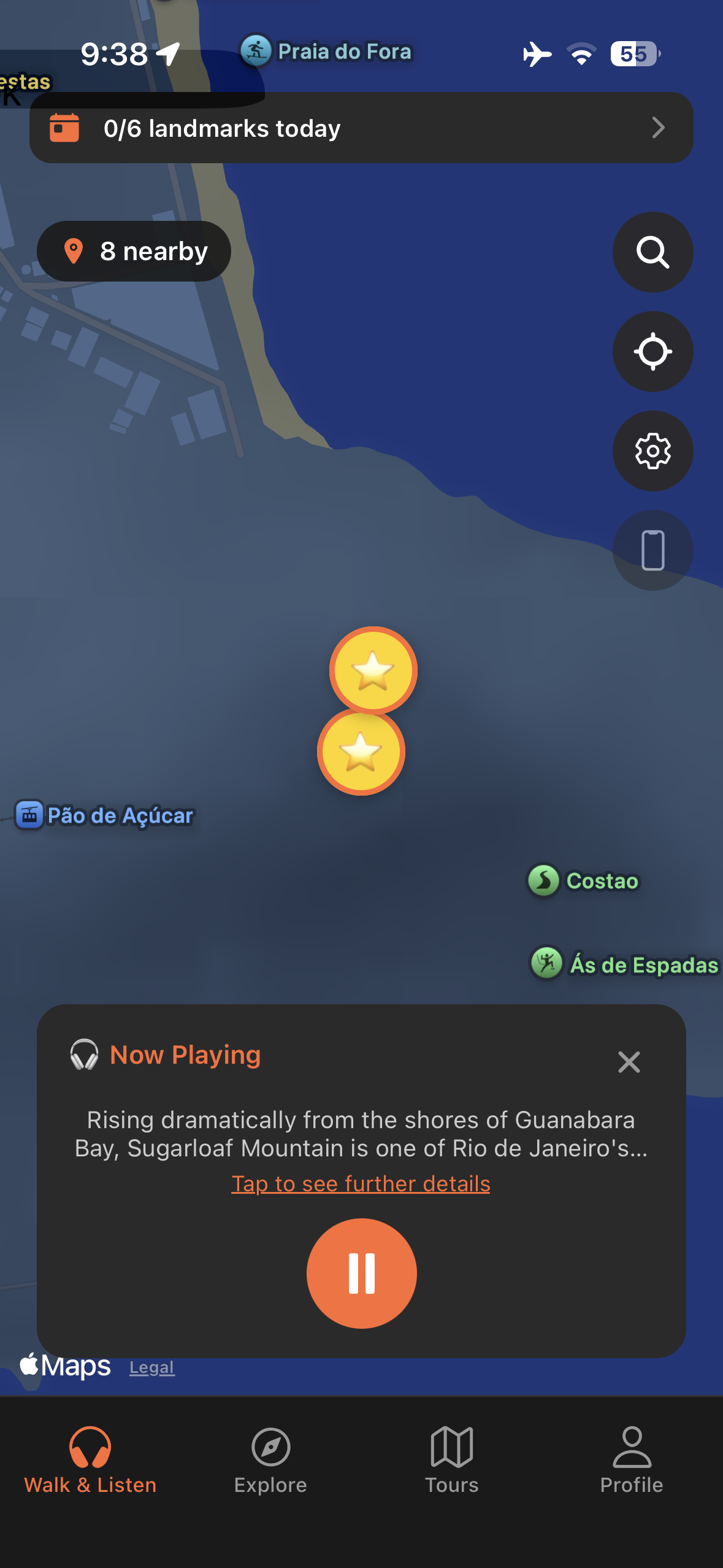
Urban Tales GPS map in Rio de Janeiro with story automatically triggered

Walk freely. Every landmark around you has a story ready.

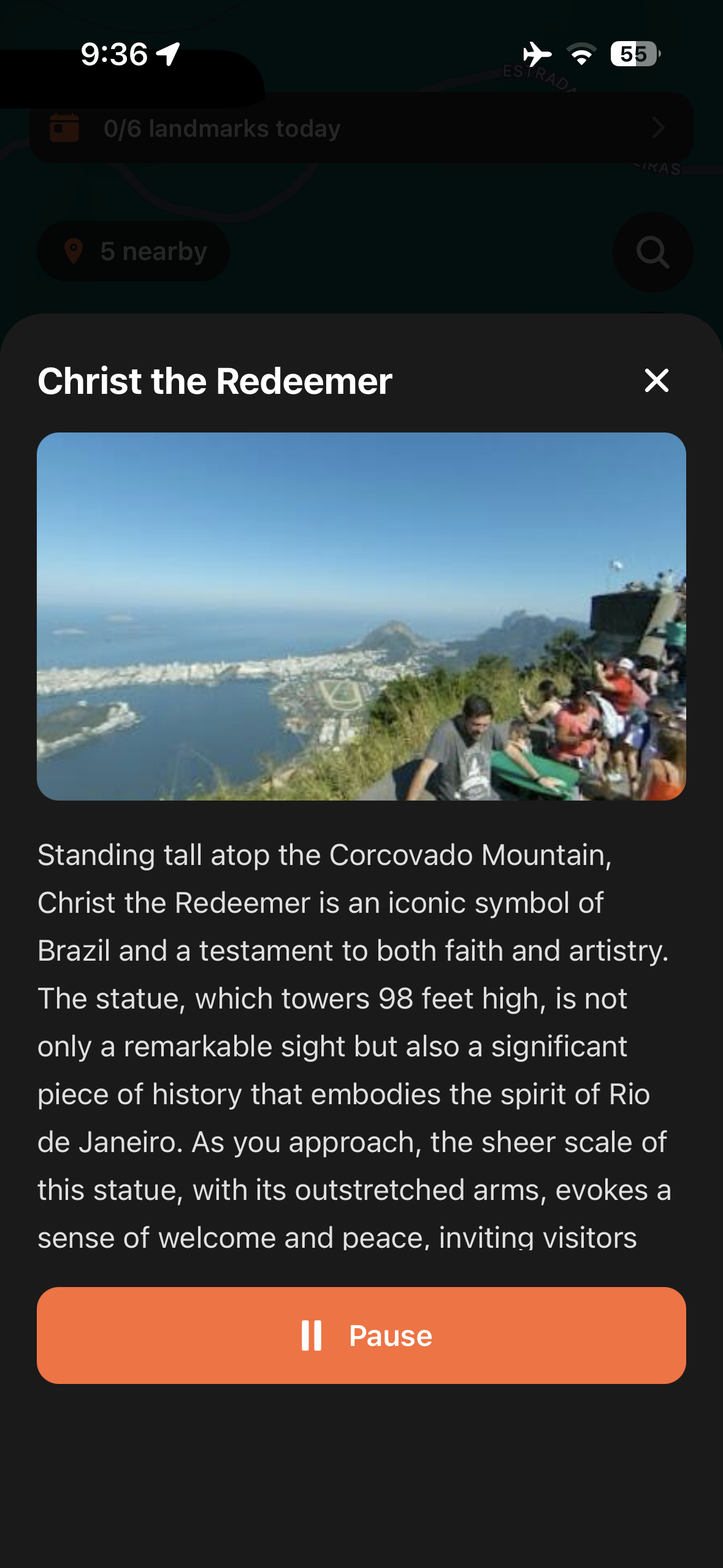
Urban Tales story panel in Rio de Janeiro with photo and narration

Rich stories. History, legends and context for every landmark.

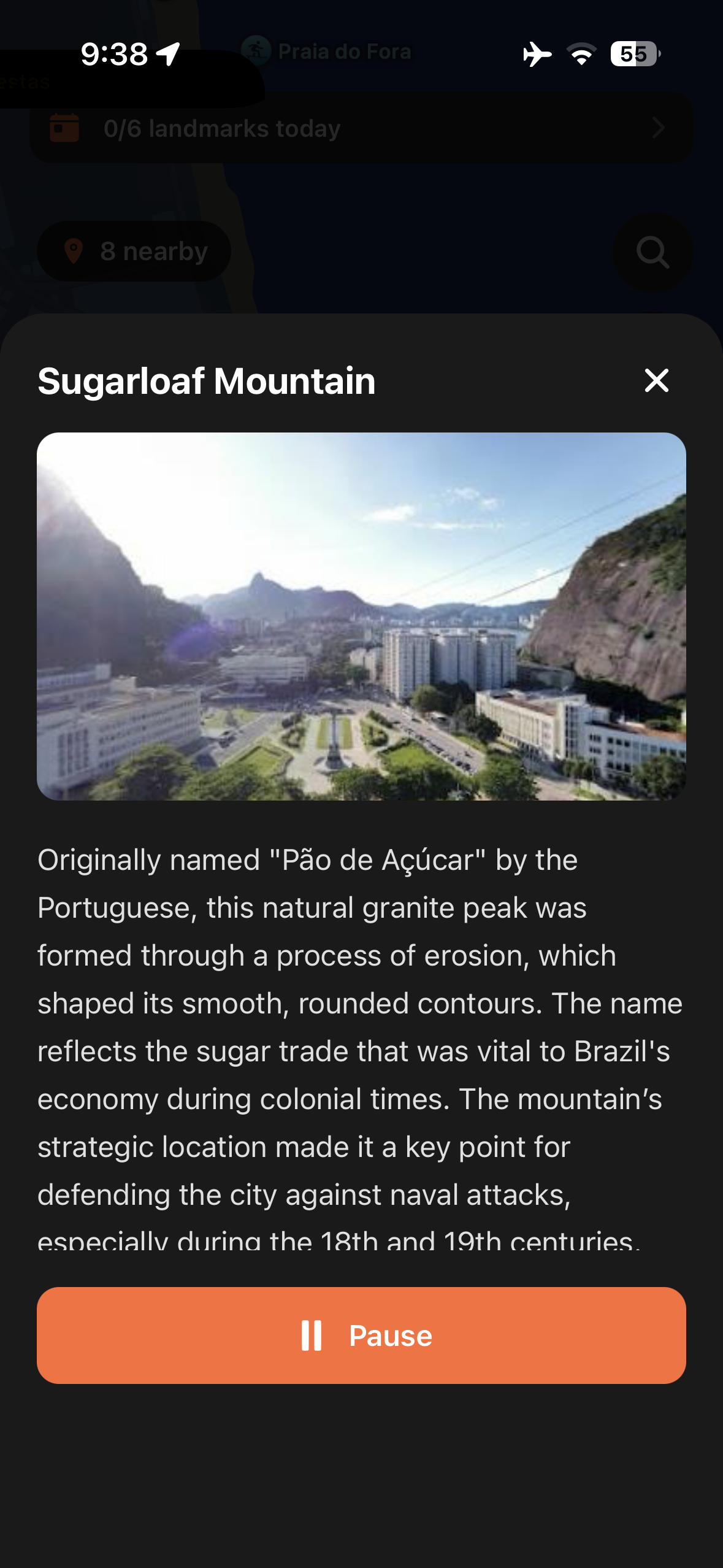
Urban Tales story panel in Rio de Janeiro with photo and narration

4 storytelling styles. Historical, Legends, Fun Facts and Cinematic.


How it works

Open the app.
Start walking.

No preparation, no pre-booked route, no group to keep up with. Urban Tales works the moment you step outside.

01

Download and open the map

The app shows landmarks around you the moment you open it. Works anywhere in Rio de Janeiro — the app covers the full city.

02

Walk toward anything that catches your eye

As you get close to a landmark, the audio starts automatically. Put your phone in your pocket and just walk and listen.

03

Build a route or explore freely

Create a half-day route, a full-day itinerary, a 7-wonders tour or a custom path. Or ignore all of that and wander — the app keeps up.


What you'll hear

The Rio de Janeiro most visitors
never actually learn.

These are the kinds of stories Urban Tales narrates as you walk. Each one triggers automatically when you're standing in the right place.

History

Christ the Redeemer · Corcovado Mountain

The most recognised statue in the world took 9 years to build — and almost fell apart before it was finished

Christ the Redeemer was completed in 1931 after nine years of construction, using reinforced concrete and soapstone tiles carried by hand up Corcovado Mountain. The French sculptor Paul Landowski designed the face and hands in his Paris studio, shipped them to Rio in pieces, then was never invited to the inauguration. A lightning strike in 2008 damaged the right thumb and the head. The statue is struck by lightning approximately four times a year. The view from the top encompasses one of the most dramatic cityscapes on Earth.

Legend

Sugarloaf Mountain · Urca

The Portuguese named it after a sugar mould — but the Tupi people had a different name for it entirely

Pão de Açúcar — Sugarloaf — gets its name from the conical clay moulds used to refine sugar in colonial Brazil. The resemblance to those moulds struck the Portuguese so strongly they never used another name. But the Tupi people who lived here before the Portuguese arrived called it Pau-nh-acuqua — high, pointed, solitary hill. The cable car that reaches the summit, installed in 1912, was the third aerial tramway built in the world. James Bond fought on it in Moonraker, in 1979.

History

Lapa Arches · Centro

The aqueduct that supplied Rio with water for 150 years now carries a tram

The Carioca Aqueduct was built in the 18th century to carry water from the Santa Teresa hills into central Rio. Its 42 arches stretched 270 metres across what was then open land. When Rio's water supply was modernised in 1896, the structure was repurposed as a viaduct for trams travelling between the city centre and Santa Teresa. The trams still run. The area beneath the arches — Lapa — became Rio's most famous nightlife district, the birthplace of samba and choro, where musicians still play in the arched bars until dawn.

Fun fact

Copacabana · South Zone

Copacabana Beach hosts 2 million people on New Year's Eve — all wearing white

The tradition of wearing white on Réveillon in Brazil comes from Candomblé and Umbanda religious practices, where white symbolises peace, purity and a fresh start. Millions of Cariocas gather on Copacabana Beach on New Year's Eve, dressed entirely in white, to watch fireworks over the water and release offerings into the sea for Iemanjá, the goddess of the ocean. It is the largest New Year's Eve celebration on Earth — and one of the few major public events where the entire crowd dresses in the same colour.

Cinematic

Favela Santa Marta · Botafogo

Michael Jackson filmed a music video here in 1996 — and the community built a statue of him

In 1996, Michael Jackson filmed the music video for "They Don't Care About Us" in Santa Marta, one of Rio's oldest favelas on the hillside above Botafogo. The community welcomed him enthusiastically. Years later, after his death in 2009, residents of Santa Marta erected a bronze statue of Jackson in his iconic Thriller pose at the entrance to the favela. It stands there today, next to a mural, in the neighbourhood where residents say he was the first international celebrity to come to them rather than asking them to come to him.

Legend

Tijuca Forest · North Zone

The world's largest urban forest was destroyed by coffee farming — then replanted by hand in the 19th century

The Tijuca Forest, which blankets the mountains surrounding Rio and is visible from the city as a dark green crown, is not a remnant of original Atlantic Forest. It was almost entirely destroyed by coffee plantations in the early 19th century. Emperor Pedro II, alarmed by Rio's degrading water supply, ordered the forest replanted starting in 1861 — the world's first large-scale tropical reforestation project. Most of what you see today was planted by hand over 50 years. It is now home to over 200 species of birds and dozens of mammals.


Where to walk

Rio de Janeiro's neighborhoods,
explained through stories.

Urban Tales covers the full city. Here are the areas where the stories are thickest.

Centro & Lapa

The historic heart of Rio, where the colonial city was built and where the Lapa Arches carry trams to Santa Teresa. The birthplace of samba, choro and Rio's most famous nightlife.

Santa Teresa

The bohemian hilltop neighborhood of artists, musicians and historic mansions. Reached by the last remaining tram in Rio, it looks down over the city from the edge of the Tijuca Forest.

Copacabana & Ipanema

The beaches that defined a city's identity. The Girl from Ipanema was written about a real person who walked past the same bar every day in 1962. The bossa nova was born in these apartment buildings.

Urca & Flamengo

Sugarloaf Mountain rises from the sea here. Urca is one of Rio's most peaceful neighborhoods — a village inside a city, watched over by a granite peak that has defined the skyline for four centuries.

Corcovado & Tijuca

The mountain with the outstretched arms. The Tijuca Forest surrounding it was destroyed and then replanted by hand — the world's first major tropical reforestation project, now one of the largest urban forests on Earth.

Santa Marta & Vidigal

Two of Rio's most famous favelas, built into the hillsides above the south zone. Each has its own history, its own relationship with the city below, and more stories per square metre than almost anywhere else in Rio.


Storytelling styles

Choose how Rio de Janeiro
speaks to you.

The same landmark sounds completely different in each mode. Switch styles anytime during your walk.

Historical

Context, dates, politics, empires. What actually happened here and why it mattered. For travelers who want to leave Rio de Janeiro genuinely knowing things.

Legends

Myths, curses, ghosts and ancient superstitions. The stories locals told each other before the history books were written.

Fun Facts

The absurd, the surprising and the genuinely weird. Perfect for keeping energy up on a long walk or exploring with kids.

Cinematic

Films shot here, Carnival documented here, directors who fell for the light. Rio through the lens of cinema.


FAQ

Common questions about
Urban Tales in Rio de Janeiro.

Does Urban Tales cover Christ the Redeemer and Sugarloaf Mountain?

Yes. Urban Tales covers both Christ the Redeemer on Corcovado Mountain and Sugarloaf Mountain, with stories triggered as you approach each landmark. Access to the summit requires separate tickets — Urban Tales starts telling stories from the moment you enter the area.

Is Urban Tales worth it if I have already been to Rio?

Especially then. The stories behind Christ the Redeemer's construction, the reforestation of Tijuca, the origins of Carnival and the relationship between Rio's neighborhoods reward deeper exploration every time.

How does the pricing work for Rio de Janeiro?

You can start exploring for free. A day pass unlocks the full Rio experience for a single day, or you can unlock the city permanently. No subscriptions required.

What languages is the Rio de Janeiro audio guide available in?

Urban Tales supports English, Spanish (LATAM), Brazilian Portuguese, French and German. The Brazilian Portuguese narration for Rio is particularly rich — Rio's stories told in the language they were born in.

Can I use Urban Tales for a half-day or full-day visit?

Yes. Rio is spread across a dramatic landscape — mountains, beaches and neighborhoods that each feel like different cities. The tour generator builds routes for your available time, whether you have a morning in Santa Teresa or a full day across the south zone.

Rio de Janeiro is waiting.
The stories start the moment you land.

Free to download. No tour group. No fixed schedule.

Download on theApp Store
Get it onGoogle Play

Explore more

Urban Tales works
everywhere you travel.

Explore our full collection of cities at urbantales.net/cities.html See the full list and find your next destination.

View all cities →