Rome, Italy

The Eternal City
has a story
on every corner.

Urban Tales is a GPS audio guide app that narrates Rome's hidden history, legends and secrets automatically as you walk — at your own pace, with no tour group to follow.


Walk up to a landmark.
The story starts.

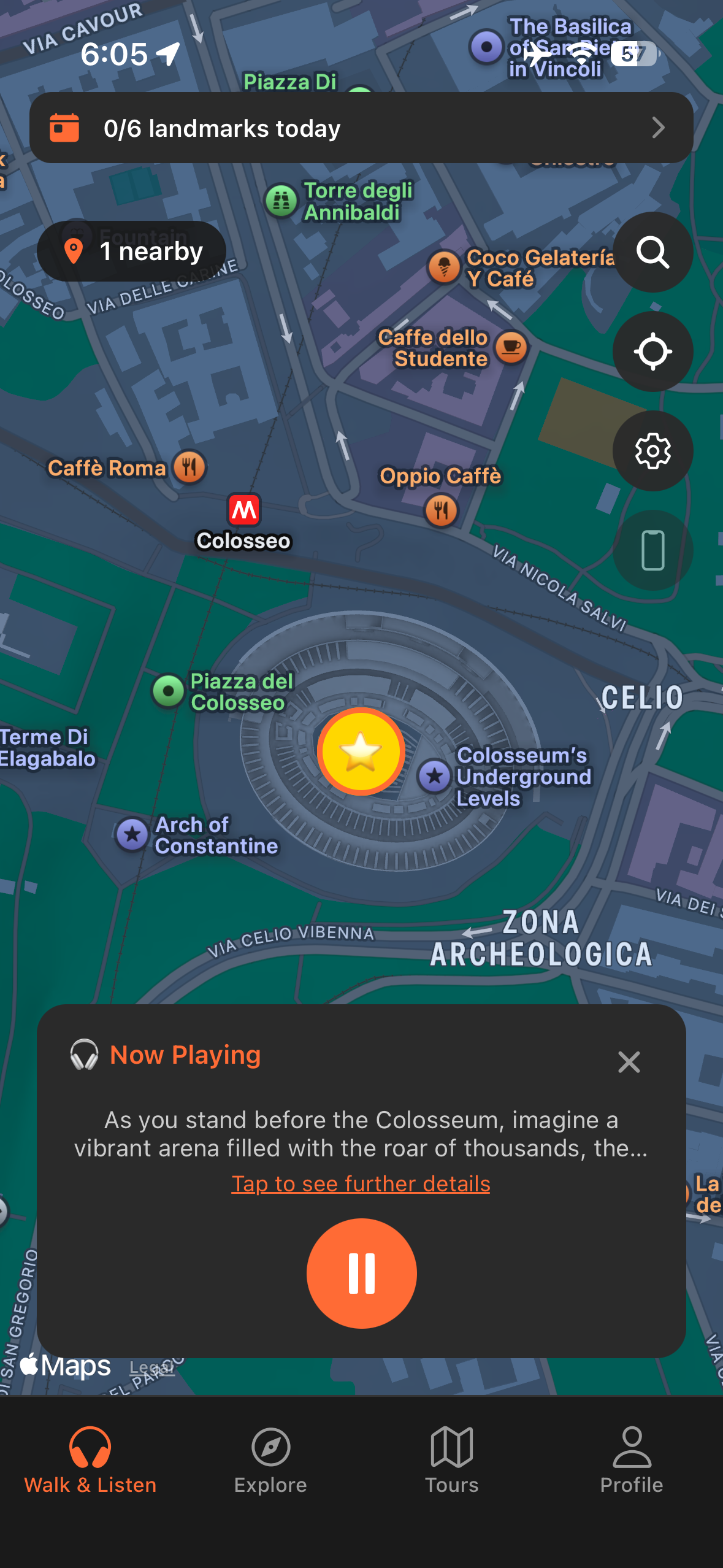
No tapping. No searching. Urban Tales detects your GPS position and plays audio automatically the moment you're close enough. Put your phone in your pocket — just walk and listen.

Urban Tales app showing the GPS map near the Colosseum in Rome with audio automatically triggered

GPS triggered. Audio starts the moment you arrive at a landmark.

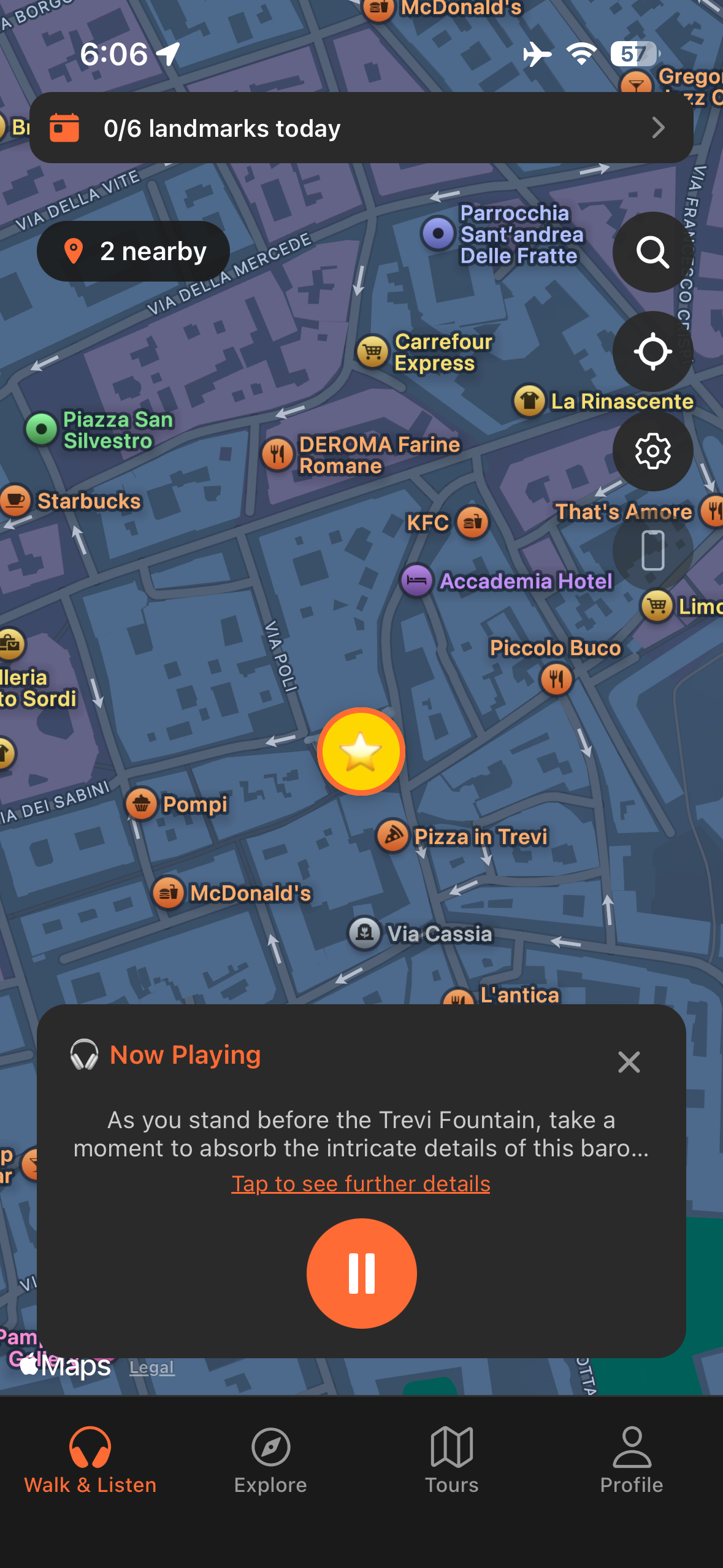
Urban Tales GPS map near the Trevi Fountain with story automatically triggered

Walk freely. Every landmark around you has a story ready.

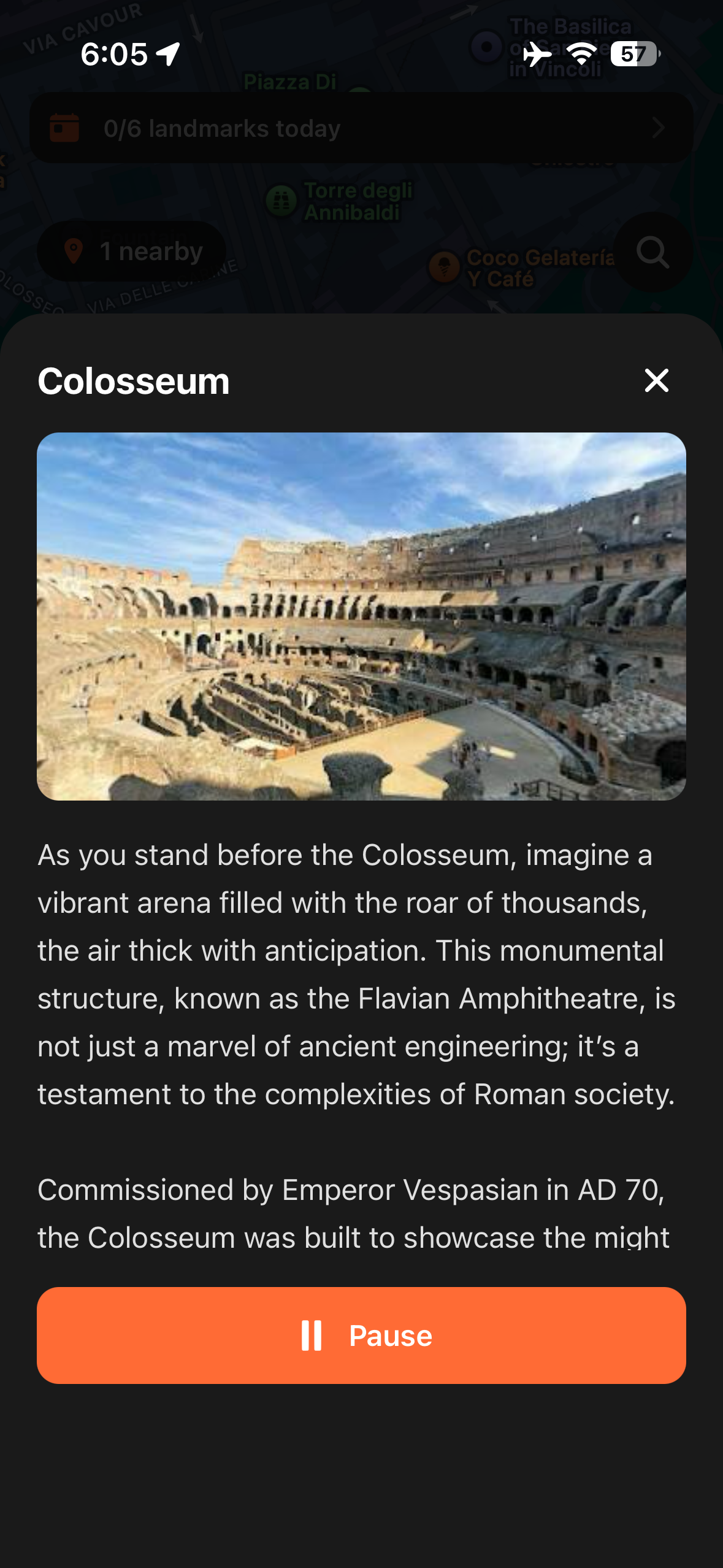
Urban Tales story panel for the Colosseum showing narration text and photo of the interior

Rich stories. History, legends and context for every landmark.

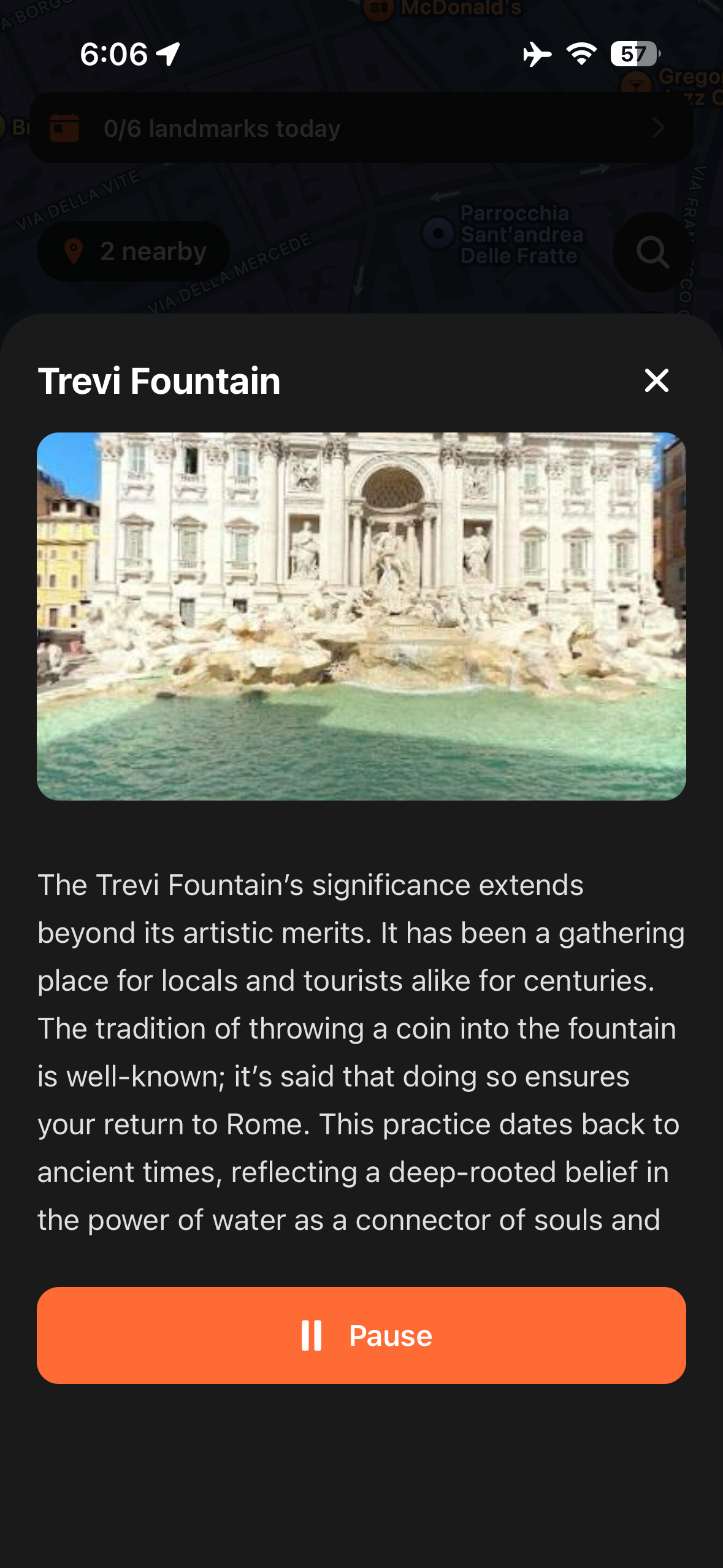
Urban Tales story panel for the Trevi Fountain with photo and narration text

4 storytelling styles. Historical, Legends, Fun Facts and Cinematic.


How it works

Open the app.
Start walking.

No preparation, no pre-booked route, no group to keep up with. Urban Tales works the moment you step outside.

01

Download and open the map

The app shows landmarks around you the moment you open it. Works anywhere in Rome — from the Colosseum to a quiet street in Pigneto.

02

Walk toward anything that catches your eye

As you get close to a landmark, the audio starts automatically. Put your phone in your pocket and just walk and listen.

03

Build a route or explore freely

Create a half-day route, a full-day itinerary, a 7-wonders tour or a custom path. Or ignore all of that and wander — the app keeps up.


What you'll hear

The Rome most visitors
never actually learn.

These are the kinds of stories Urban Tales narrates as you walk. Each one triggers automatically when you're standing in the right place.

Legend

Bocca della Verità · Santa Maria in Cosmedin

The marble face that bites liars

Long before Audrey Hepburn made it famous in Roman Holiday, this ancient marble mask was used as a lie detector. The legend holds that anyone who places their hand in its mouth and tells a lie will have it bitten off. Medieval priests reportedly hid a scorpion behind it to make the threat more convincing. Originally, it wasn't even art — it was a Roman drain cover.

History

Trevi Fountain · Fontana di Trevi

The coin tradition has a darker origin than you think

The full ritual — forgotten by most — involves three coins. The first brings you back to Rome, the second grants a new romance, the third ensures a marriage. The fountain collects over a million euros a year in wishes. Most of it goes to a local food bank.

History

The Colosseum · Anfiteatro Flavio

Gladiators were celebrities — not slaves dragged from dungeons

Many gladiators were volunteers who traded freedom for fame and a steady income. Crowds had favorites. Graffiti survived in Pompeii naming specific fighters as heartthrobs. The Colosseum held up to 80,000 spectators and had an awning system operated by sailors from the Roman naval fleet.

Fun fact

The Pantheon · Campo Marzio

In continuous use for 2,000 years — and the concrete still puzzles engineers

Completed around 125 AD, the Pantheon has never stopped being used. The dome's volcanic ash concrete has resisted cracking for two millennia in ways modern concrete cannot replicate. The 9-metre oculus at the top is the only source of natural light. When it rains, the floor drains it through holes built into the marble.

Legend

Tiber Island · Isola Tiberina

A snake chose this island as Rome's hospital — and it still is one

When a plague devastated Rome in 293 BC, a sacred serpent escaped a delegation's boat and swam to a small island in the Tiber. Romans took it as a divine sign and built a temple there. The island has been a place of healing ever since — it still houses a working hospital today. The snake wrapped around a rod became the universal symbol of medicine.

Cinematic

Largo di Torre Argentina · Campo Marzio

Julius Caesar was assassinated here. It's now a cat sanctuary.

On the Ides of March, 44 BC, Julius Caesar was stabbed 23 times in the ruins that sit in this open square. Most tourists walk around it without recognising what it is. Today, hundreds of cats live in the sunken ruins under the care of local volunteers. You can visit them for free.


Where to walk

Rome's neighborhoods,
explained through stories.

Urban Tales covers the full city. Here are the areas where the stories are thickest.

Historic Centre

The Colosseum, Forum, Palatine Hill, Circus Maximus. Every stone has a name and a story spanning centuries. The densest layer of Urban Tales content in the city.

Campo Marzio

The Pantheon, Trevi Fountain, Piazza Navona, Largo Argentina. Ancient ruins sit next to Baroque fountains and daily street life. Rome at its most layered.

Trastevere

Rome's oldest neighborhood. Narrow cobblestone streets, ivy-covered walls, medieval churches. Once the most multicultural district in the ancient world.

Monti

Once Rome's most notorious slum, now its most charming neighborhood. Artisan shops, wine bars and Renaissance-era streets unchanged since antiquity.

Vatican & Borgo

St. Peter's Basilica sits atop Nero's circus. Castel Sant'Angelo was a mausoleum before it was a fortress. One of the most dramatic power stories in human civilisation.

Testaccio & Aventino

Home to Rome's ancient food market, the Capuchin Crypt and a keyhole view of St. Peter's perfectly framed by trees. Where Rome keeps its strangest secrets.


Storytelling styles

Choose how Rome
speaks to you.

The same landmark sounds completely different in each mode. Switch styles anytime during your walk.

Historical

Context, dates, politics, empires. What actually happened here and why it mattered. For travelers who want to leave Rome genuinely knowing things.

Legends

Myths, curses, ghosts and ancient superstitions. The stories Romans told each other before the history books were written.

Fun Facts

The absurd, the surprising and the genuinely weird. Perfect for keeping energy up on a long walk or exploring with kids.

Cinematic

Films shot here, scenes set here, directors who obsessed over these streets. Rome through the lens of cinema.


FAQ

Common questions about
Urban Tales in Rome.

Does Urban Tales cover the Vatican and St. Peter's Basilica?

Yes. Urban Tales covers the Vatican area including St. Peter's Square, Castel Sant'Angelo and the surrounding Borgo neighborhood, with stories triggered as you walk through the outdoor areas.

Is Urban Tales worth it if I've already been to Rome before?

Especially then. Returning visitors often say the app transformed places they thought they already knew. The Legends mode in particular reveals a Rome that standard tours never cover — the ghosts, the superstitions, the stories that didn't make the guidebooks.

How does the pricing work for Rome?

You can start exploring for free. A day pass unlocks the full Rome experience for a single day, or you can unlock the city permanently. No subscriptions required.

What languages is the Rome audio guide available in?

Urban Tales supports English, Spanish (LATAM), Brazilian Portuguese, French and German. Select your language when you first open the app.

Can I use Urban Tales for a half-day or full-day visit?

Yes. The app supports quick stops, half-day explorations, full-day routes and custom tours. Use the route generator to build an itinerary based on your available time and interests.

Rome is waiting.
The stories start the moment you land.

Free to download. No tour group. No fixed schedule.

Download on theApp Store
Get it onGoogle Play

Explore more

Urban Tales works
everywhere you travel.

Rome, Paris, Mexico City and more cities being added regularly. See the full list and find your next destination.

View all cities →