Identical twins
The art museum and the Natural History Museum facing it across Maria-Theresien-Platz are near mirror images, built together to show the empire's art on one side and its science on the other.
Emperor Franz Joseph built it to put the Habsburgs' art collections on show, opposite an identical twin full of meteorites and dinosaurs. Here's what you're looking at, and what to listen for when you get there.
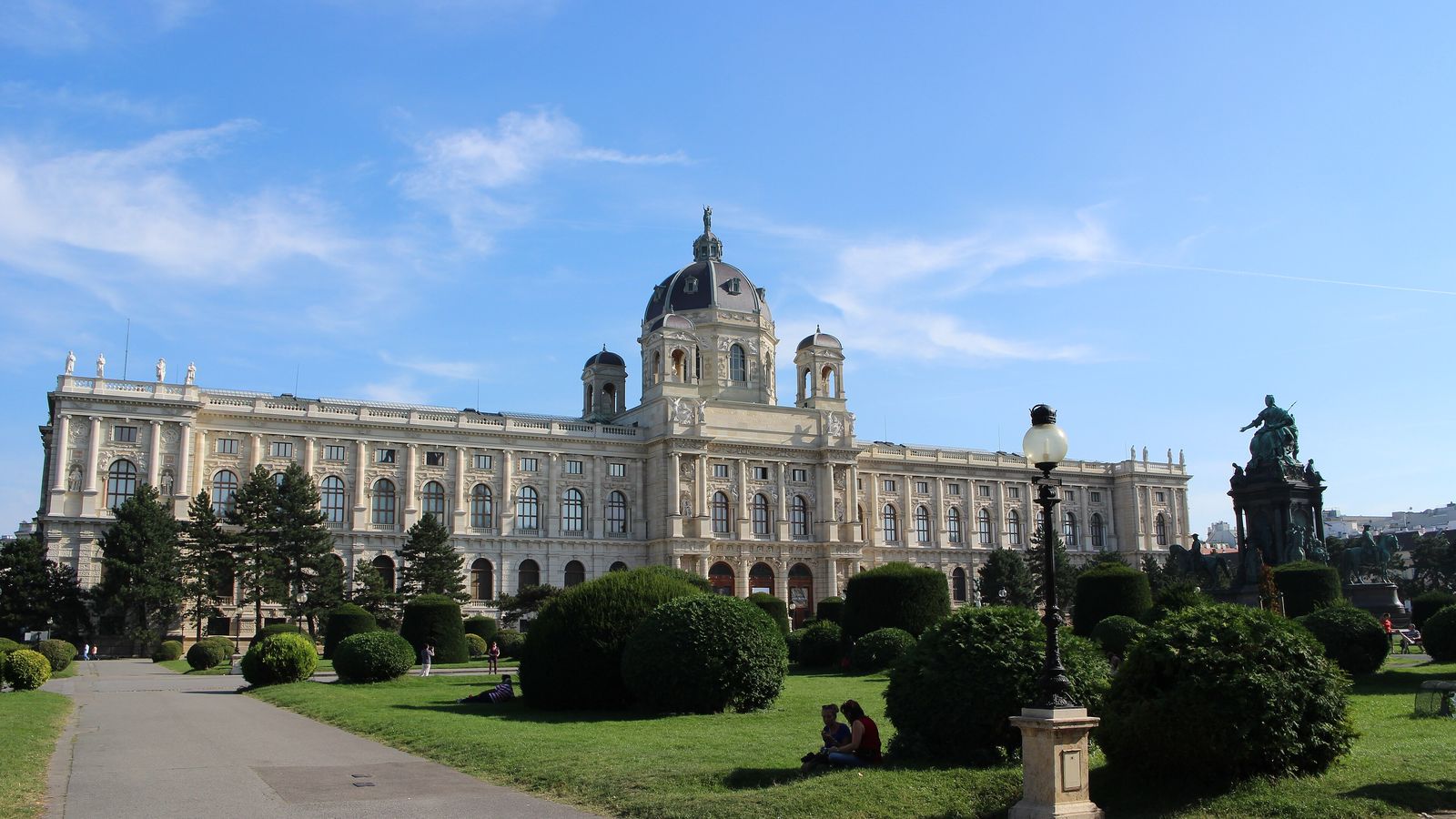
The art museum and the Natural History Museum facing it across Maria-Theresien-Platz are near mirror images, built together to show the empire's art on one side and its science on the other.
Between the columns of the grand staircase, a young Gustav Klimt, his brother Ernst and Franz Matsch painted the spandrels in 1890–91. Klimt's are the women in the Egyptian and Greek panels.
The museum has the world's largest collection of paintings by Pieter Bruegel the Elder, including "The Tower of Babel" and "Hunters in the Snow".
The Habsburgs' collections: old master paintings, Egyptian and Greek antiquities, the Kunstkammer and coins.
In 1891, built for Emperor Franz Joseph by Gottfried Semper and Karl von Hasenauer.
Yes, Klimt painted panels above the grand staircase in 1890–91.