A mocking nickname
The rough, wavy stone front looked to many like an open quarry, and La Pedrera began as a joke. Today it's the building's official second name.
Built between 1906 and 1912 for Pere Milà and Roser Segimon, Gaudí's last house was so strange to Barcelona that people nicknamed it La Pedrera, the stone quarry. The name stuck.
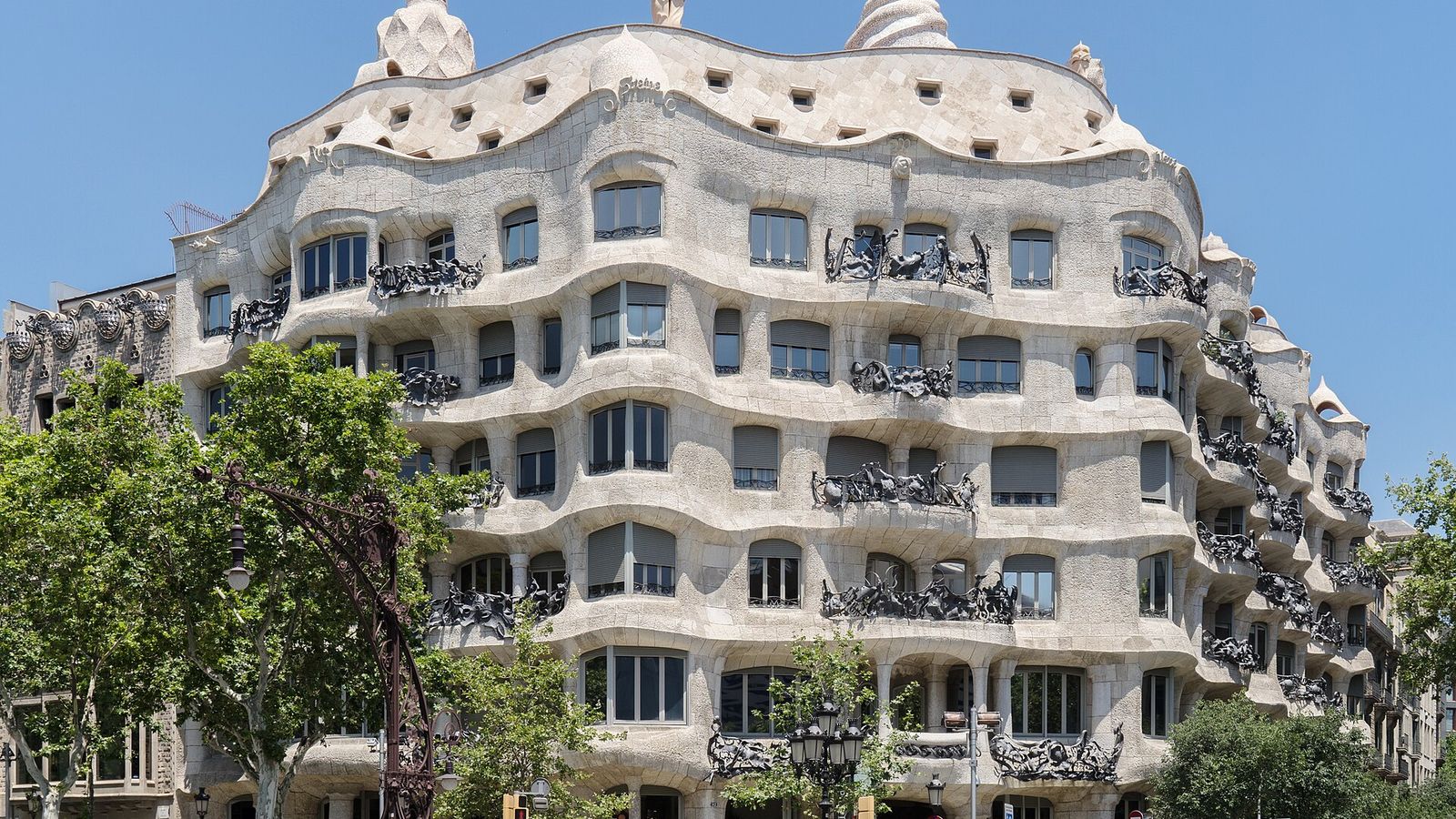
The rough, wavy stone front looked to many like an open quarry, and La Pedrera began as a joke. Today it's the building's official second name.
The stone façade doesn't carry the building: columns and beams do. That let every apartment have a different, freely shaped floor plan.
The chimneys and ventilation towers on the roof look like helmeted guards. The twisted iron balconies were made with Gaudí's collaborator Josep Maria Jujol.
It means 'the stone quarry' in Catalan: the rough, wavy stone façade reminded people of one. It started as a mocking nickname.
Between 1906 and 1912, for Pere Milà and Roser Segimon.
Yes, including an apartment, the attic and the rooftop. Book online, especially for sunset and night visits.