The goddess who went to Paris
After defeating Prussia in 1806, Napoleon had the Quadriga taken to Paris. It came back in 1814, and Schinkel gave the goddess a new staff with the Iron Cross and a Prussian eagle, turning her into Victoria.
Berlin's most famous landmark was built as a gate of peace, stood in the border zone for 28 years, and became the symbol of a reunited Germany. Here's what you're looking at, and what to listen for when you get there.
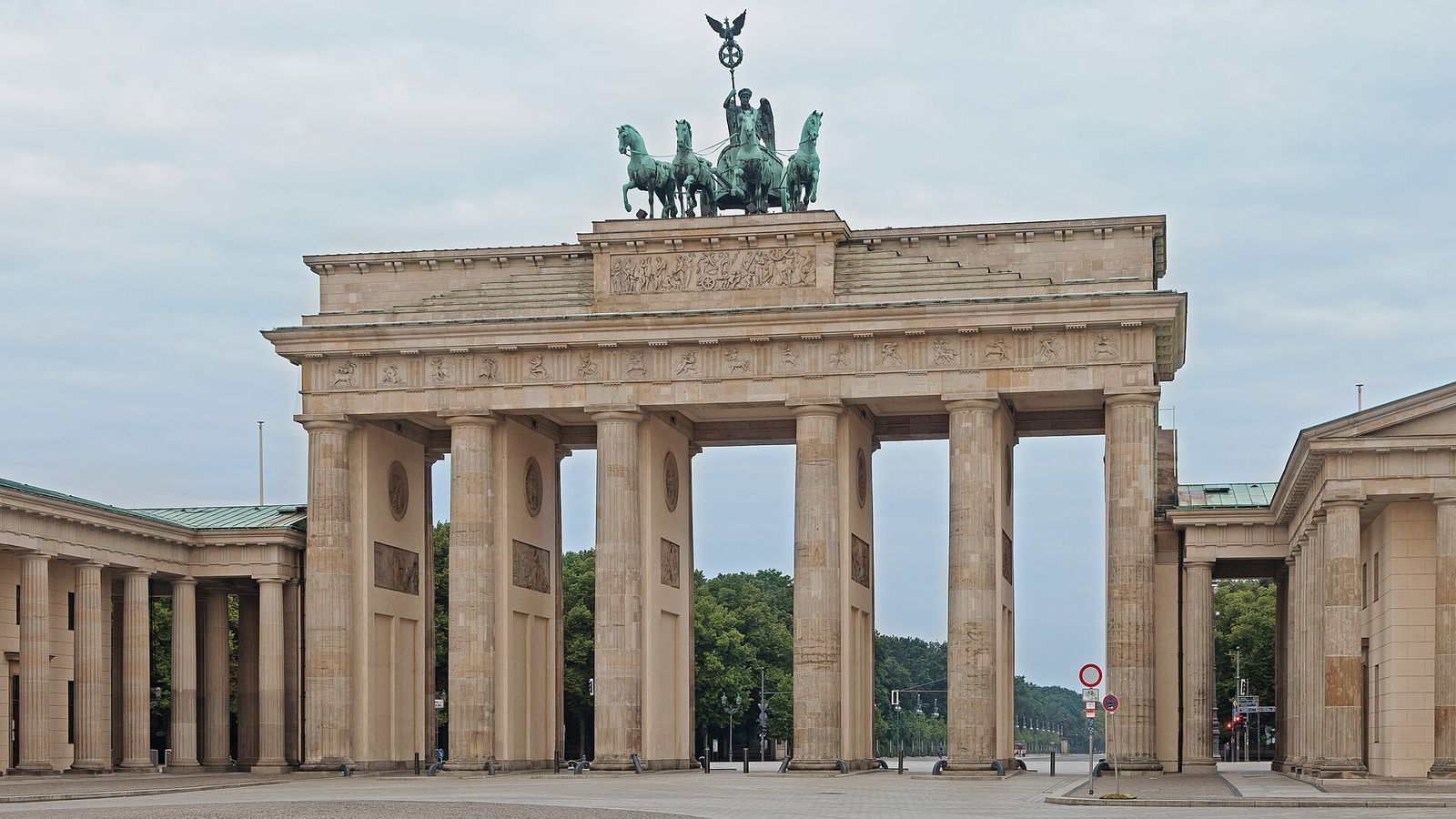
After defeating Prussia in 1806, Napoleon had the Quadriga taken to Paris. It came back in 1814, and Schinkel gave the goddess a new staff with the Iron Cross and a Prussian eagle, turning her into Victoria.
When the Wall went up in 1961, the gate ended up in the border zone on the eastern side. Nobody from East or West could walk through it until it reopened on 22 December 1989.
On 12 June 1987, Ronald Reagan spoke in front of the gate on the western side and called out: "Mr. Gorbachev, tear down this wall!" Two and a half years later, it fell.
Because the road that started here led to the town of Brandenburg an der Havel.
Between 1788 and 1791, for King Frederick William II, designed by Carl Gotthard Langhans after the Propylaea in Athens.
Yes. It reopened to pedestrians in December 1989 and has been closed to cars since 2002.