One man, two crowns
The statue on the column is Pedro IV, King of Portugal and, as Pedro I, the first Emperor of Brazil, who declared Brazil's independence in 1822.
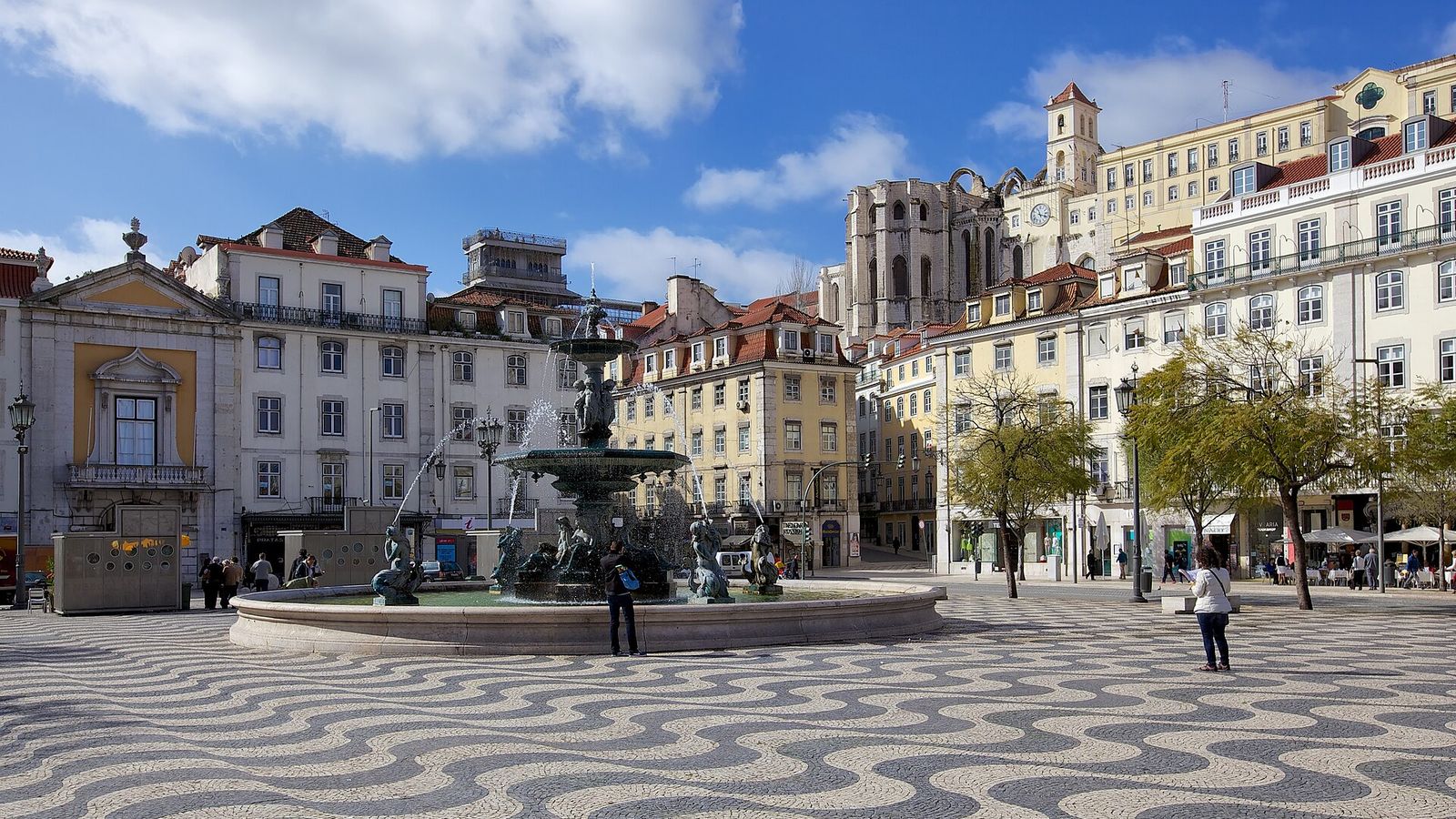
Lisbon's main square since the Middle Ages, officially Praça Dom Pedro IV. Here's what you're looking at, and what to listen for when you get there.
The statue on the column is Pedro IV, King of Portugal and, as Pedro I, the first Emperor of Brazil, who declared Brazil's independence in 1822.
For centuries the square hosted markets, festivals and bullfights, and in darker times the public executions of the Inquisition.
The black-and-white wave pavement, laid in the 1840s, was one of the first big designs in Portuguese stone pavement, the calçada portuguesa.
That's its official name, after Pedro IV, whose statue tops the column; everyone still calls it Rossio.
King of Portugal and, as Pedro I, the first Emperor of Brazil, who declared Brazilian independence in 1822.
Portuguese stone pavement (calçada portuguesa) laid in the 1840s, imitating the sea.