Water from the hills
The aqueduct brought water from the Carioca River in the Santa Teresa hills to the fountains of central Rio. The arches were finished in 1750, replacing a first aqueduct of 1723.
Forty-two white arches that once carried water to the city and now carry the Santa Teresa tram. Here's what you're looking at, and what to listen for when you get there.
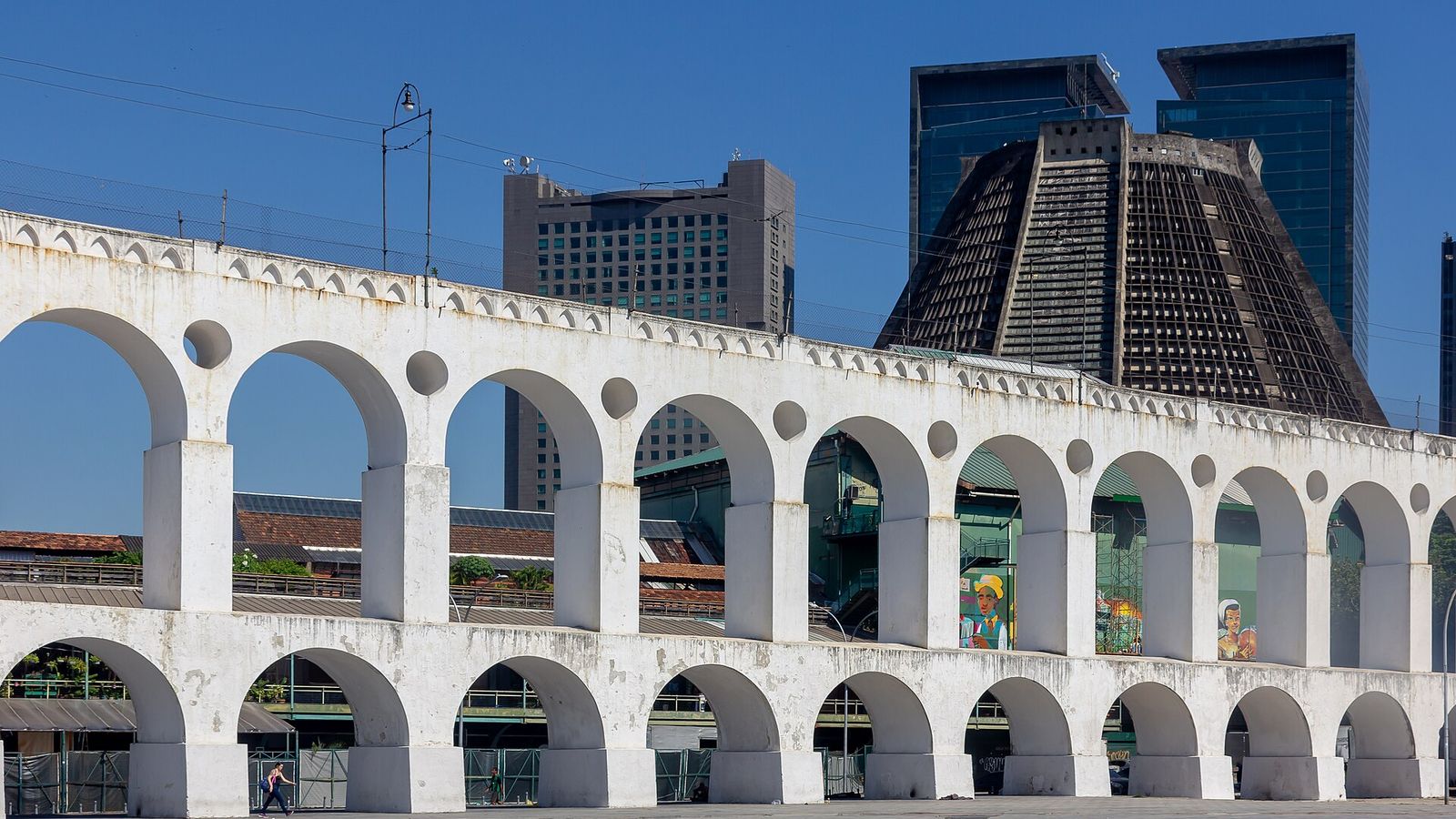
The aqueduct brought water from the Carioca River in the Santa Teresa hills to the fountains of central Rio. The arches were finished in 1750, replacing a first aqueduct of 1723.
When the city's water supply was modernised, the arches became a viaduct: since 1896 the Santa Teresa tram has crossed them.
The neighbourhood under the arches became Rio's best-known nightlife district, a historic home of samba and choro.
The arches were completed in 1750, replacing an earlier aqueduct finished in 1723.
Yes, the Santa Teresa tram crosses the arches on its way up the hill.
About 270 metres, with 42 arches.