A promise during the plague
As plague killed thousands in Vienna in 1713, Emperor Charles VI vowed to build a church to St Charles Borromeo, the patron saint of plague victims. Work began in 1716.
An emperor promised a church during the plague of 1713 and kept his word. Today you can ride up into its dome and stand face to face with the frescoes. Here's what you're looking at.
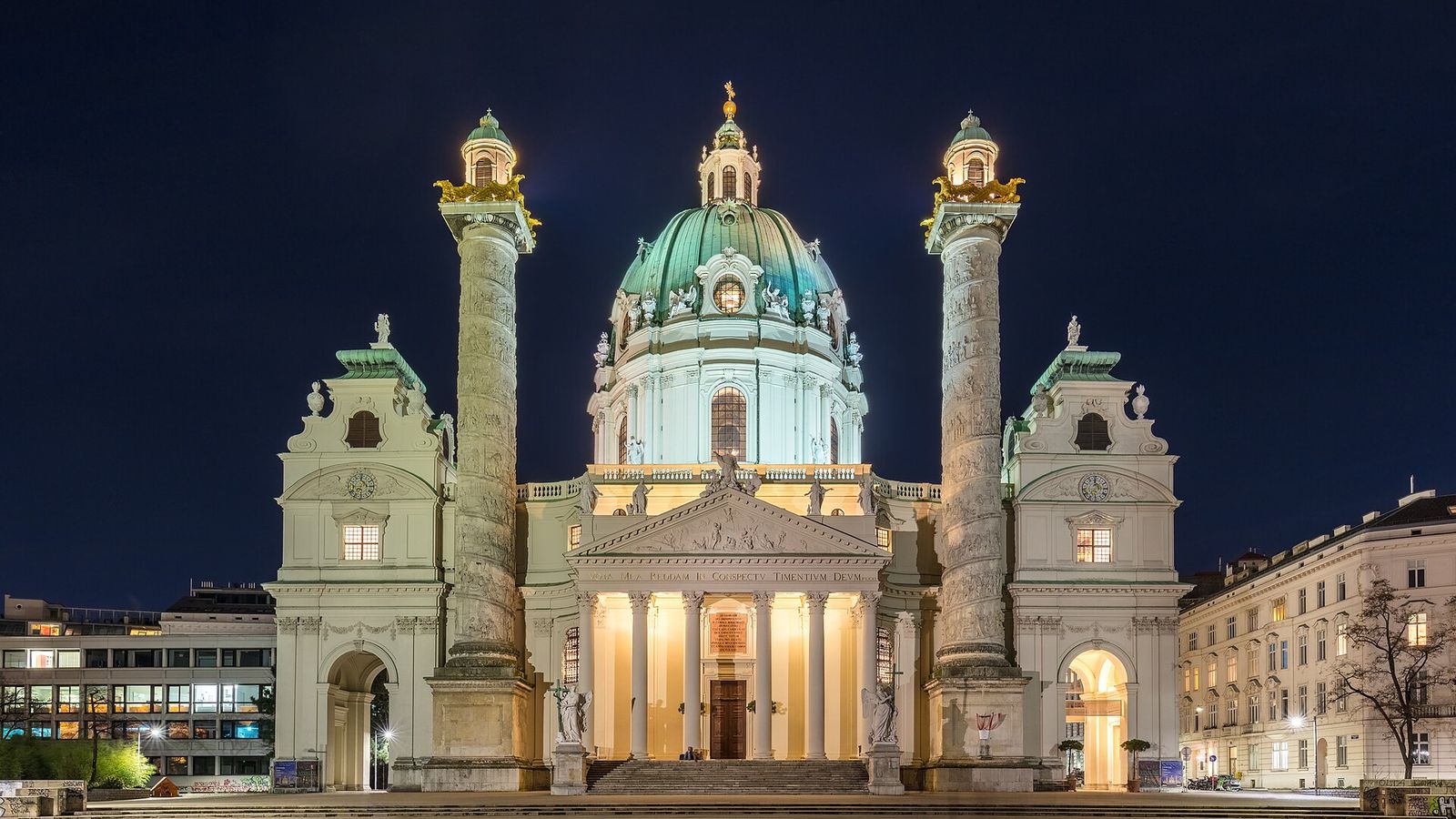
As plague killed thousands in Vienna in 1713, Emperor Charles VI vowed to build a church to St Charles Borromeo, the patron saint of plague victims. Work began in 1716.
The columns either side of the entrance copy Trajan's Column in Rome. Their spiralling reliefs tell the life of St Charles Borromeo, and they also nod to the Pillars of Hercules on the emperor's emblem.
A panoramic elevator, put in for restoration work, now takes visitors 32 meters up into the dome to see Johann Michael Rottmayr's frescoes up close.
As a vow by Emperor Charles VI during the plague of 1713, dedicated to St Charles Borromeo.
Yes, a panoramic elevator and stairs take you into the dome to see the frescoes up close.
Johann Bernhard Fischer von Erlach; his son Joseph Emanuel completed it in 1737.