Read both sides
The inscription facing the Acropolis says: "This is Athens, the former city of Theseus." The one facing the Olympieion says: "This is the city of Hadrian, and not of Theseus."
Built in marble around AD 131–132 to honour the emperor Hadrian, this gateway stands on the road from the old city to the Temple of Olympian Zeus. Here's what you're looking at, and what to listen for as you walk under it.
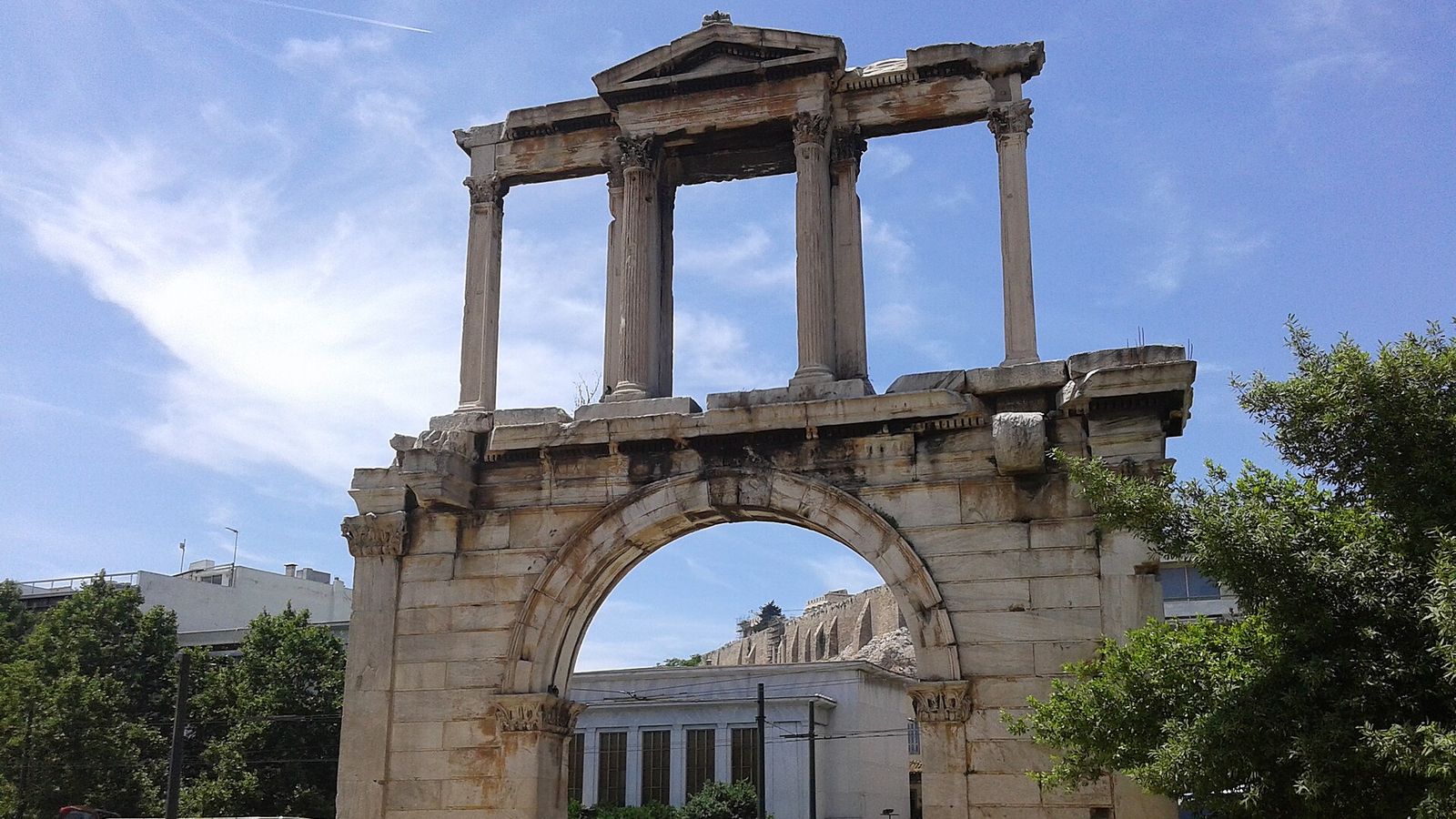
The inscription facing the Acropolis says: "This is Athens, the former city of Theseus." The one facing the Olympieion says: "This is the city of Hadrian, and not of Theseus."
The arch was long thought to divide old Athens from a new Roman quarter. Excavations have shown that wasn't so; the inscriptions honour Hadrian as a benefactor of the city.
The marble blocks are held together with metal clamps rather than cement, and have stood that way for almost 1,900 years.
One side reads "This is Athens, the former city of Theseus"; the other reads "This is the city of Hadrian, and not of Theseus."
Around AD 131 or 132, probably by the people of Athens, to honour the emperor Hadrian.
On Amalias Avenue, next to the Temple of Olympian Zeus, about 325 metres southeast of the Acropolis.