Blown up in 1687
During a Venetian siege in 1687, the Ottoman garrison was storing gunpowder inside. A Venetian shell hit it, and the explosion tore out the middle of the building. Most of the damage you see dates from that one day.
Built between 447 and 438 BC for the goddess Athena, the Parthenon has been a temple, a treasury, a church, a mosque and a gunpowder store. Here's what you're looking at, and what to listen for when you reach the top of the Acropolis.
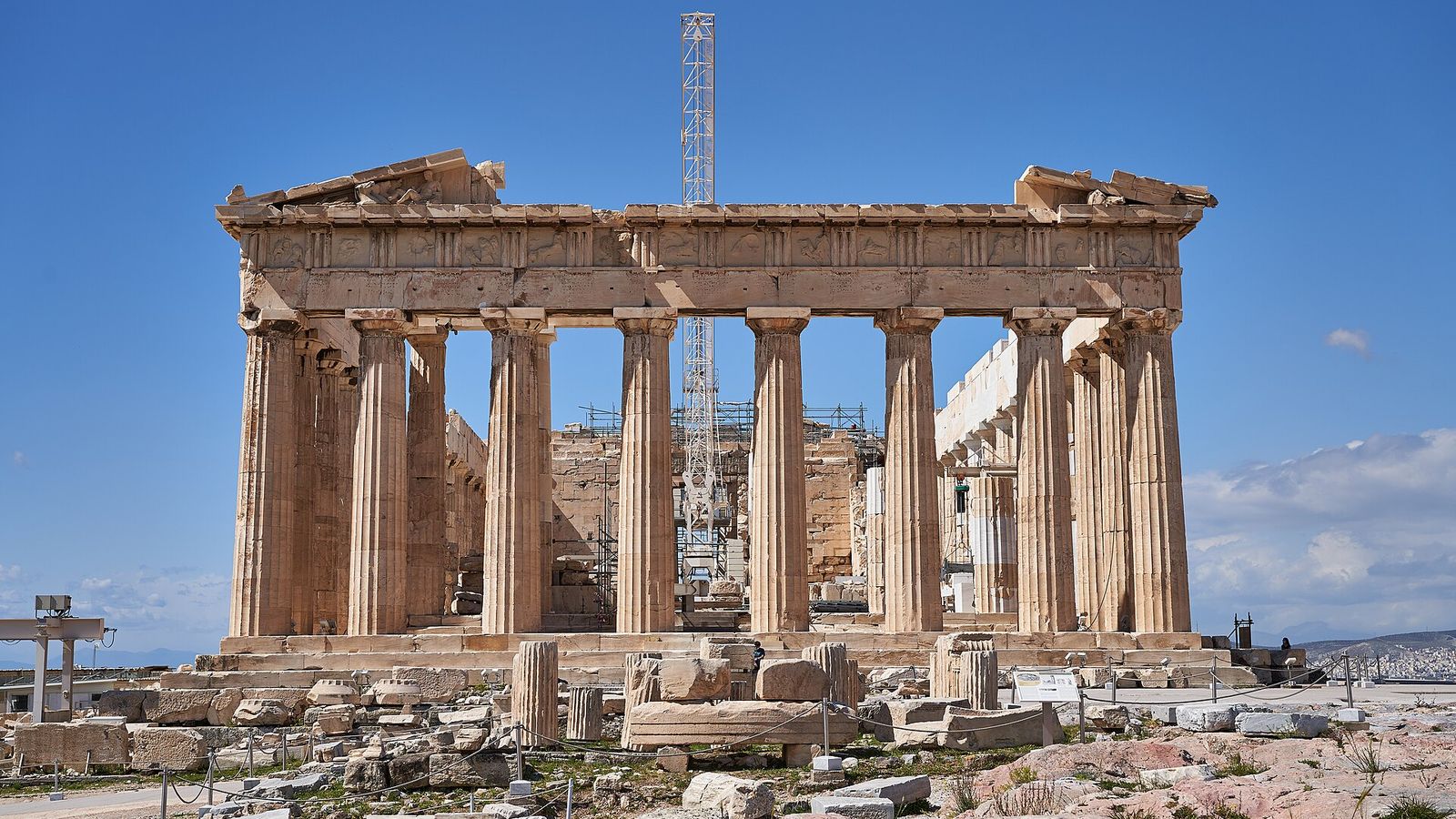
During a Venetian siege in 1687, the Ottoman garrison was storing gunpowder inside. A Venetian shell hit it, and the explosion tore out the middle of the building. Most of the damage you see dates from that one day.
In the early 1800s, agents of Lord Elgin removed about half of the surviving sculptures and shipped them to Britain. They're in the British Museum; the Acropolis Museum below the hill shows plaster copies in their place.
The columns lean slightly inwards and swell a little towards the middle, and the floor rises gently to the centre. These refinements are why the building looks perfectly straight from below.
Between 447 and 438 BC, with its sculptures finished around 432 BC, during the time of the statesman Pericles.
Mainly because of an explosion in 1687, when gunpowder stored inside by the Ottoman garrison was hit during a Venetian siege. Many of its sculptures were later removed and taken to Britain.
Athena, the patron goddess of Athens. A huge gold-and-ivory statue of her by Phidias once stood inside; it has not survived.