Water for a thirsty city
King João V ordered the aqueduct in 1731 to bring spring water to Lisbon; the first water arrived in 1748.
A line of stone arches striding across the Alcântara valley, built to bring Lisbon its first reliable fresh water. Here's what you're looking at, and what to listen for when you get there.
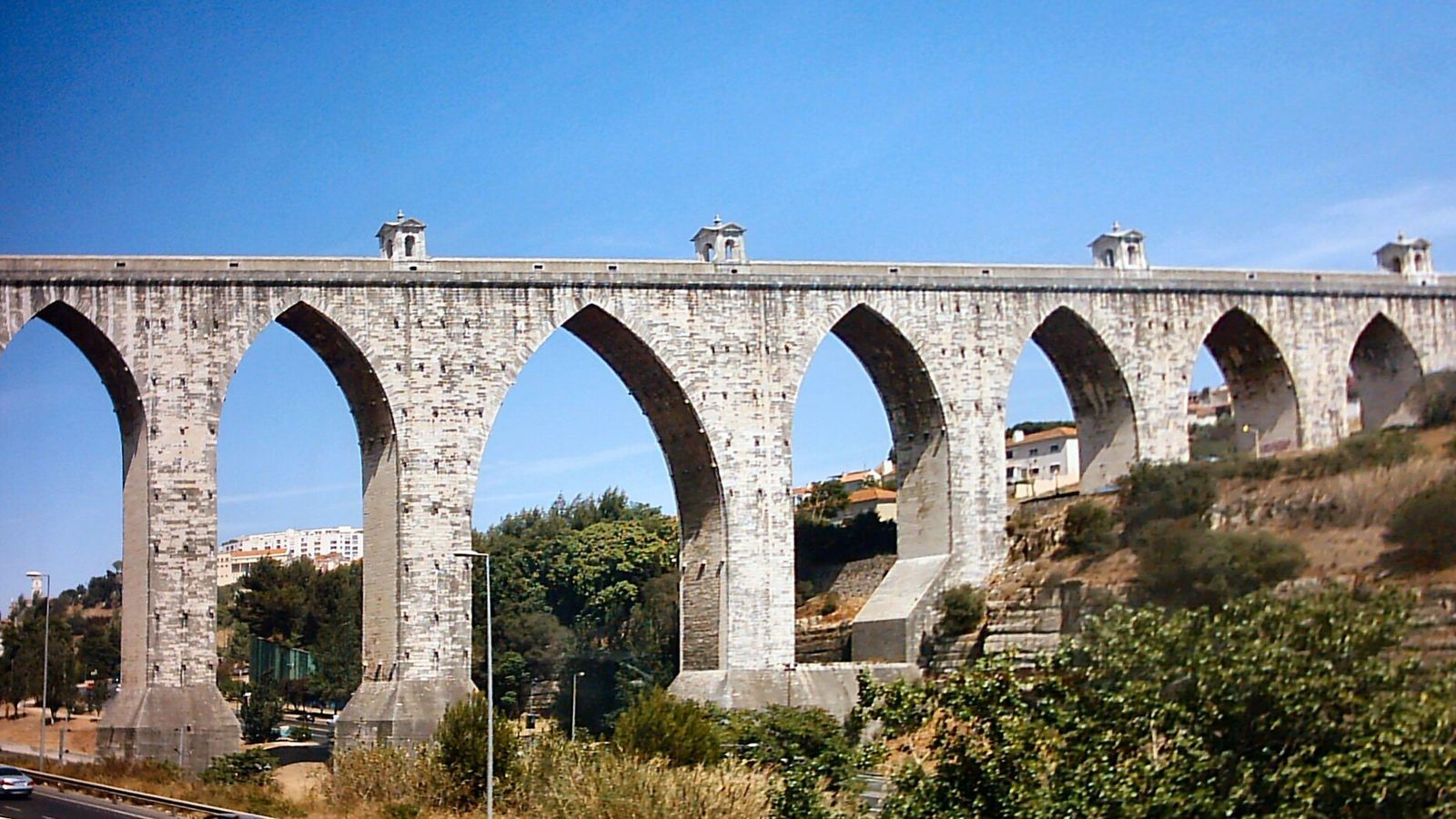
King João V ordered the aqueduct in 1731 to bring spring water to Lisbon; the first water arrived in 1748.
The arches over the Alcântara valley came through the 1755 earthquake that destroyed much of the city.
In the 1830s the robber Diogo Alves is said to have attacked travellers on the walkway over the arches. His preserved head is still kept at Lisbon's Faculty of Medicine.
Work began in 1731 under King João V; the main arches over the Alcântara valley were finished by 1744, and water reached Lisbon in 1748.
Its tallest arch, over the Alcântara valley, is about 65 metres high.
Yes, on visiting days you can walk the passage on top of the arches.