Moved to the middle
The fountain first stood at the side of the road, facing the Palacio de Buenavista. In 1895 it was moved to the centre of the crossroads, which made the roundabout you see.
In the middle of one of Madrid's busiest crossroads, the goddess Cybele rides a chariot pulled by two lions. The fountain was carved in 1782 and moved to this spot in 1895.
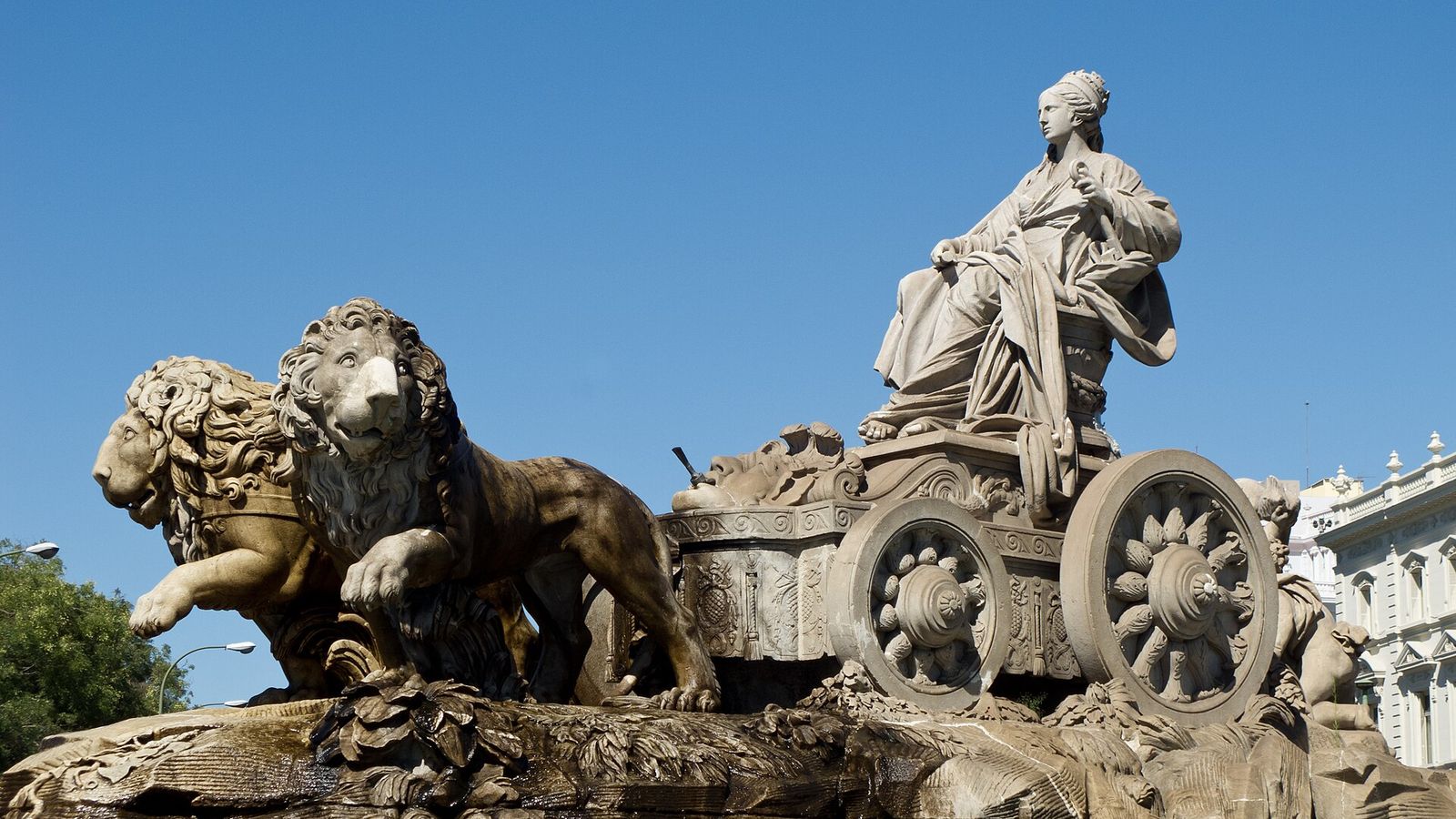
The fountain first stood at the side of the road, facing the Palacio de Buenavista. In 1895 it was moved to the centre of the crossroads, which made the roundabout you see.
The square is ringed by the Palacio de Buenavista (army headquarters), the Banco de España, the Palacio de Linares (Casa de América) and the Palacio de Cibeles, Madrid's City Hall since 2007.
When Real Madrid wins a big title, players and fans celebrate here, and a player traditionally drapes a scarf and flag on the goddess.
Cybele, a goddess of nature and fertility, on a chariot pulled by two lions.
It became their celebration spot; Atlético Madrid fans celebrate at the nearby Neptune fountain.
Originally Madrid's main post office (1919), and Madrid's City Hall since 2007.