Urban Tales › Paris › Notre-Dame

Notre-Dame de Paris: the history, and the spire that came back

Notre-Dame took nearly two centuries to build, was nearly demolished after the Revolution, burned in 2019 and reopened in December 2024. Here's what you're looking at, and what to listen for when you stand in front of it.

Notre-Dame, Paris
Photo: Dietmar Rabich · CC BY-SA 4.0 · Wikimedia Commons
Begun1163
Fire15 April 2019
Reopened7 Dec 2024
Spire96 m, rebuilt
Hear the Notre-Dame story, in the app's voice
A short preview. The full story plays on its own when you walk up to it with Urban Tales.
App StoreGoogle PlayFree to start · 5 languages

Three stories most visitors miss

1

The kings who lost their heads

In 1793 revolutionaries pulled down the 28 statues of kings on the facade, thinking they were kings of France; they were kings of Judah. Many heads were found in 1977, buried in a courtyard nearby, and are now in the Musée de Cluny.

2

Saved by a novel

By the 1830s the cathedral was in ruins. Victor Hugo's novel "The Hunchback of Notre-Dame" (1831) made Parisians care again, and Viollet-le-Duc restored it, adding the spire and many of the gargoyles you see.

3

The fire and the rebuild

On 15 April 2019 a fire destroyed the roof and the spire. It took five years and about 2,000 craftspeople to rebuild them, using oak and techniques close to the medieval ones; the cathedral reopened on 7 December 2024.
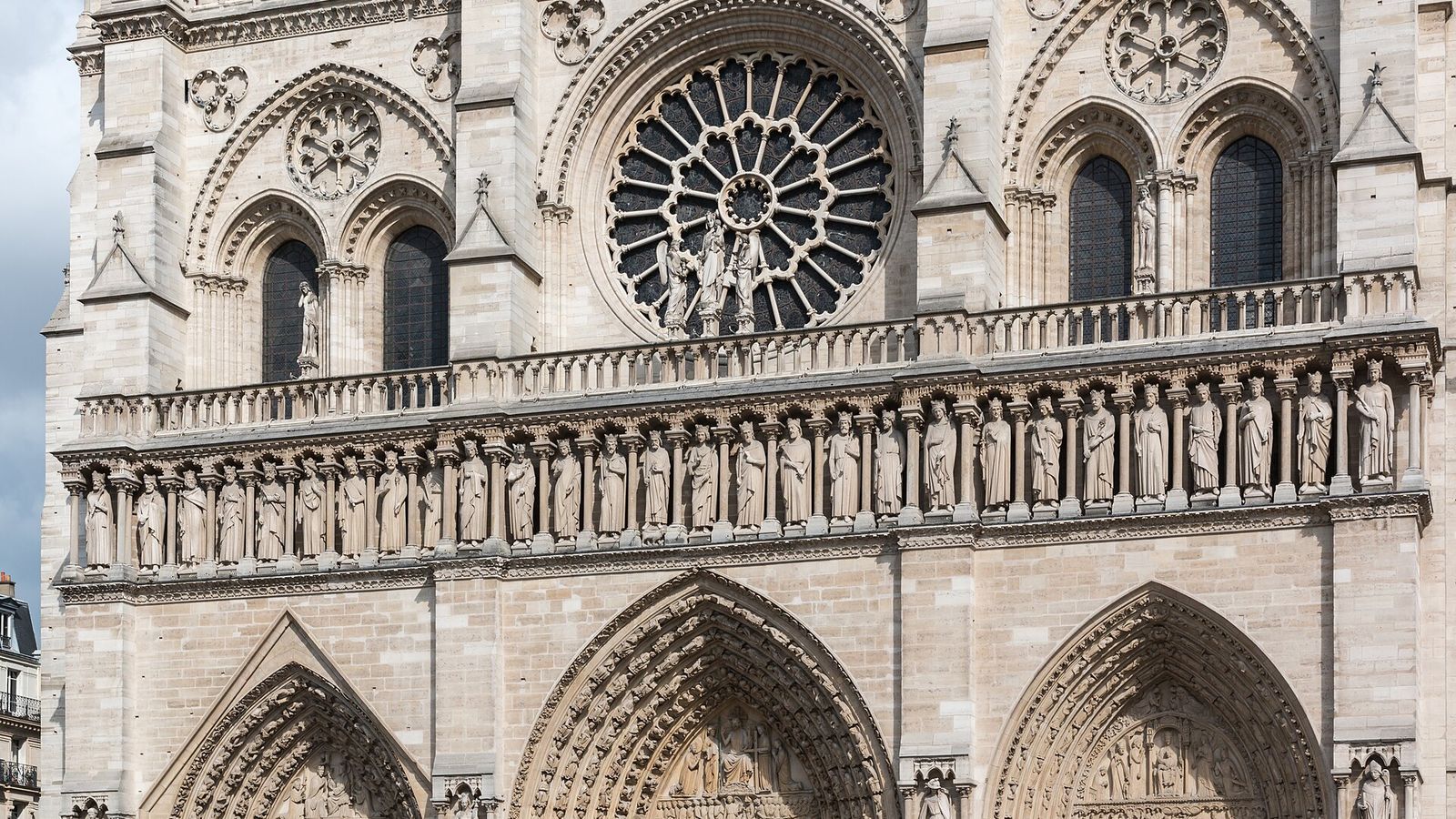
TipStand on the square and find the Gallery of Kings, the row of 28 statues above the doors: they're 19th-century replacements for the heads that were found in 1977. With Urban Tales running, the cathedral's story plays as you reach the square.

Nearby landmarks

Notre-Dame: common questions

Is Notre-Dame open again?

Yes. It reopened on 7 December 2024, after five years of restoration following the 2019 fire. Entry to the cathedral is free.

How old is Notre-Dame?

Construction began in 1163 and was largely complete by the mid-14th century.

Who designed Notre-Dame's spire?

The spire that burned in 2019 was designed by Eugène Viollet-le-Duc in the 1850s and 1860s; it was rebuilt to the same design.