The towers that don't match
Look up at the facade: the north tower was rebuilt by Chalgrin in the 1770s, the south tower was never finished. Money and the Revolution ran out first.
Paris's second-largest church took more than 130 years to build, has two towers that don't match, and a brass line on the floor that a bestseller made famous. Here's what you're looking at, and what to listen for when you step inside.
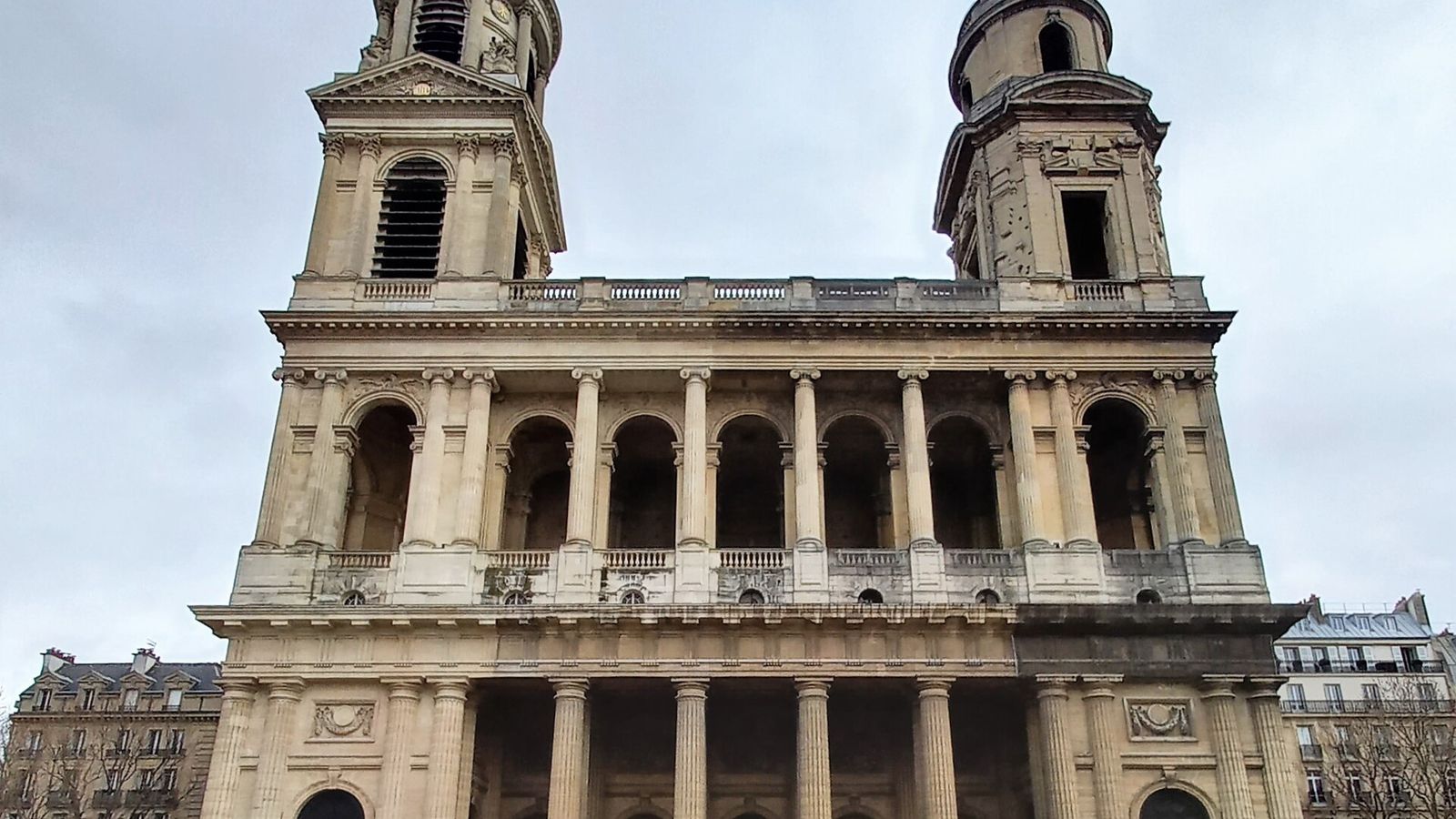
Look up at the facade: the north tower was rebuilt by Chalgrin in the 1770s, the south tower was never finished. Money and the Revolution ran out first.
A brass line crosses the floor to a marble obelisk. Sunlight through a small hole in a window lands on it at noon, which let the priests fix the exact date of the spring equinox, and so of Easter.
"The Da Vinci Code" calls the line a pagan "Rose Line". The church put up a notice to set the record straight: it's a scientific instrument from the 18th century, nothing more mysterious.
A gnomon: a brass meridian line installed in the 1740s to measure the sun's position and fix the date of Easter.
Yes, but the novel's "Rose Line" story is fiction; the church displays a notice explaining the gnomon's real purpose.
The north tower was rebuilt in the 1770s and the south tower was never completed.