Stone that bleaches in the rain
It's built of travertine from Château-Landon, which releases calcite when it gets wet. Every rain shower whitens it a little, which is why Sacré-Cœur stays white while the rest of Paris turns grey.
The basilica on top of Montmartre was built after France's defeat in 1870 and took over 40 years to finish. Its stone washes itself white in the rain. Here's what you're looking at, and what to listen for when you get there.
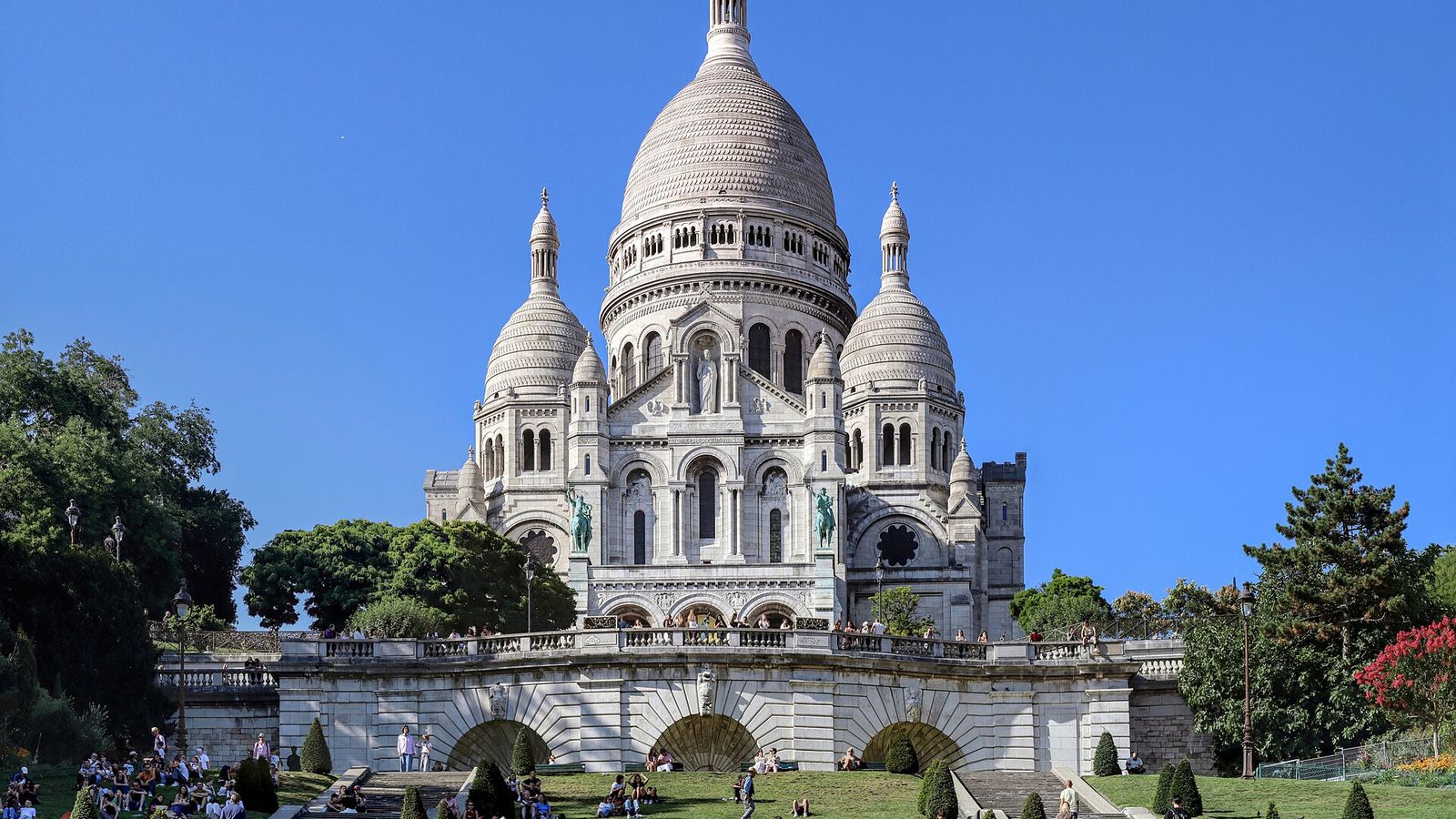
It's built of travertine from Château-Landon, which releases calcite when it gets wet. Every rain shower whitens it a little, which is why Sacré-Cœur stays white while the rest of Paris turns grey.
The Savoyarde, cast in 1895, weighs about 19 tonnes. It was pulled up the hill to Montmartre by 28 horses, and it's still one of the heaviest bells in France.
Since 1885, someone has been praying in the basilica day and night without a break, in turns, which makes it one of the longest continuous prayers in the world.
Its travertine stone releases calcite when it rains, which keeps bleaching the surface.
Construction began in 1875; it was finished in 1914 and consecrated in 1919, after the First World War.
Yes, the basilica is free; the dome climb has a ticket.