Why one side is missing
The southern outer ring fell in an earthquake in 1349. For centuries after, the fallen stone was carted away to build palaces, churches and bridges across Rome, which is why the Colosseum looks bitten on one side today.
The Flavian Amphitheatre opened in AD 80 with 100 days of games, held 50,000 or more people, and spent the Middle Ages as a quarry, a fortress and a housing block. Here's what you're looking at, and what to listen for when you stand in front of it.
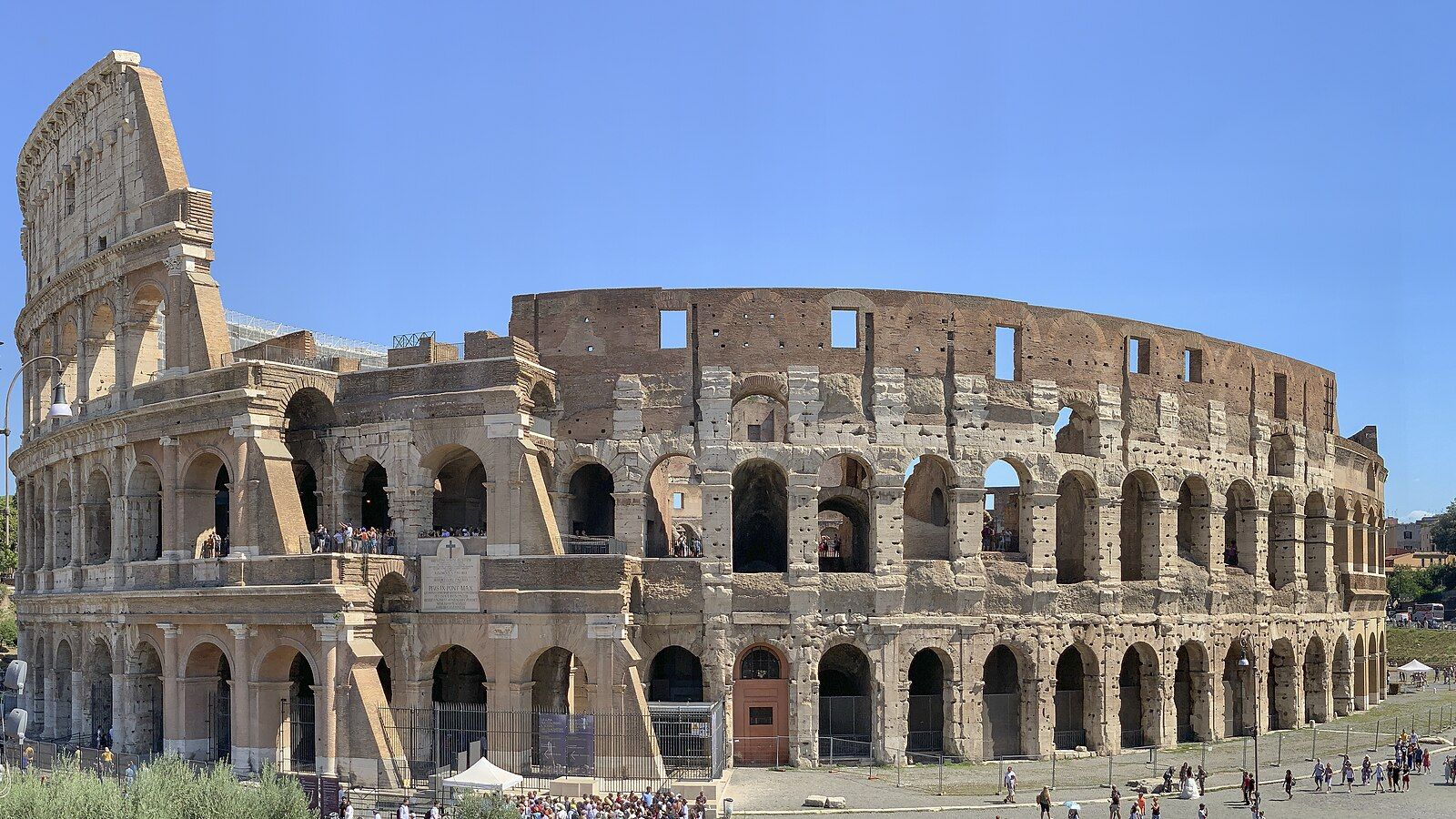
The southern outer ring fell in an earthquake in 1349. For centuries after, the fallen stone was carted away to build palaces, churches and bridges across Rome, which is why the Colosseum looks bitten on one side today.
The pockmarks covering the travertine aren't battle damage. They're where medieval builders dug out the iron clamps that held the blocks together, at a time when metal was worth more than ancient monuments.
Sailors from the imperial fleet worked the velarium, a huge awning of canvas stretched over the seats on ropes and wooden masts to shade the crowd. You can still see the stone brackets that held the masts around the top ring.
It opened in AD 80, under Emperor Titus, after about a decade of construction begun by his father Vespasian. That makes it more than 1,940 years old.
Estimates range from about 50,000 to 80,000 spectators, seated by social rank, with the emperor and senators closest to the arena.
An earthquake in 1349 brought down much of the southern outer wall, and the stone was reused for buildings across Rome for centuries afterwards.