Built on a drained swamp
The valley between the Palatine and the Capitoline was marshland until the Romans drained it with the Cloaca Maxima, one of the oldest sewers in the world, which still carries water under the city today.
For a thousand years the Forum was where Rome voted, traded, prayed and argued. Then it was buried, quarried and used to graze cattle. Here's what you're looking at, and what to listen for as you walk through it.
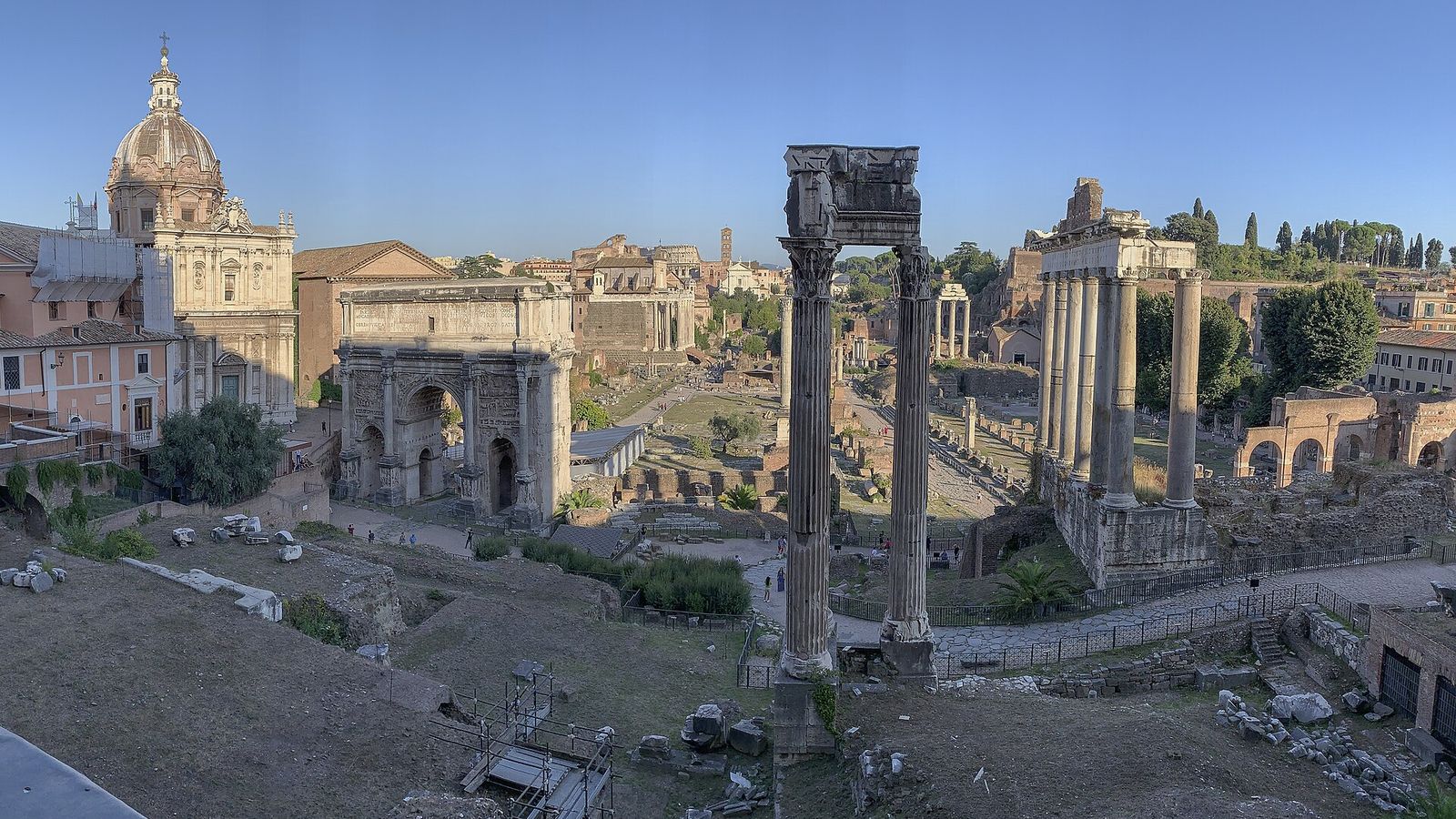
The valley between the Palatine and the Capitoline was marshland until the Romans drained it with the Cloaca Maxima, one of the oldest sewers in the world, which still carries water under the city today.
After the empire fell, the Forum filled with earth and rubble. By the Middle Ages it was a pasture called the Campo Vaccino, the "cow field", and its marble was burned for lime or carted off to build new churches.
After his murder in 44 BC, Julius Caesar's body was burned in the Forum by a crowd of mourners. The Temple of Divus Julius was built on the spot, and people still leave flowers on its remains on the Ides of March.
It was the city's center for politics, law, trade and religion: the Senate House, courts, temples and markets all stood here.
It developed from around the 7th century BC and stayed the heart of the city until the end of the Western Roman Empire in the 5th century AD.
In the Forum itself, where the Temple of Divus Julius was later built. He was killed elsewhere, in the Curia of Pompey, near today's Largo di Torre Argentina.