Urban Tales › Rome › Sant'Ignazio

Sant'Ignazio: the history, and the dome that isn't there

The Jesuits ran out of money for a dome, so a painter gave them one: on a flat canvas. Here's what you're looking at, and where to stand to see the trick work.

Sant'Ignazio, Rome
Photo: Amchupa · CC BY-SA 4.0 · Wikimedia Commons
Built1626–1650
CeilingAndrea Pozzo, 1685–1694
Fake dome≈ 17 m canvas
OrderJesuits
Hear the Sant'Ignazio story, in the app's voice
A short preview. The full story plays on its own when you walk up to it with Urban Tales.
App StoreGoogle PlayFree to start · 5 languages

Three stories most visitors miss

1

A dome made of paint

A real dome was planned, but there was no money and neighbors objected that it would block their light. In 1685 Andrea Pozzo painted one on a flat canvas instead, using perspective so precise that it looks real from the right spot.

2

The disc on the floor

Pozzo marked the exact point in the nave where his illusion works. From there the painted columns on the ceiling seem to rise straight up into the sky; step away and they start to lean.

3

Four continents on the ceiling

Around the edges of the nave ceiling, Pozzo painted Europe, Asia, Africa and America as women, showing the reach of the Jesuits' missions.
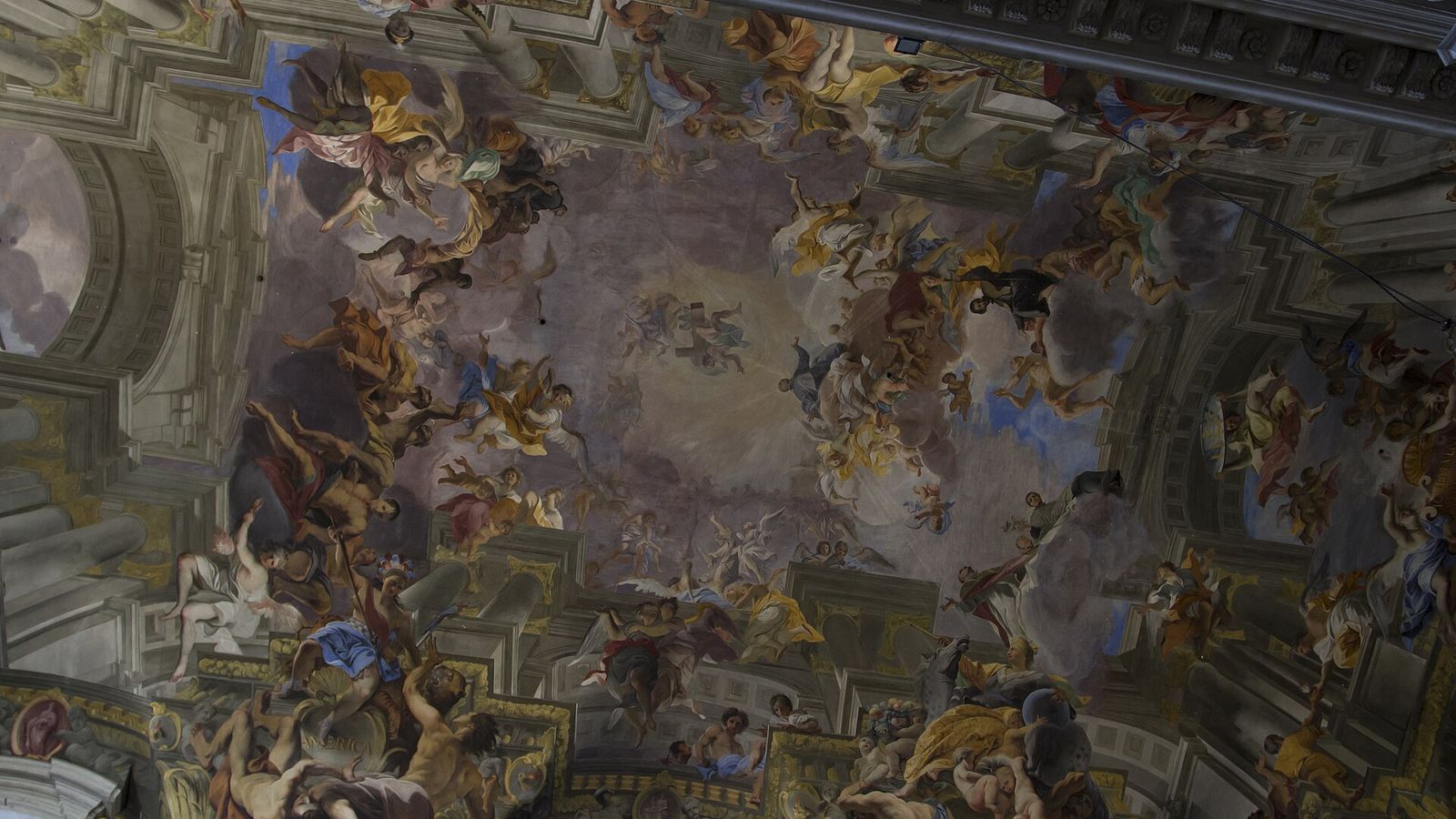
TipStand on the small marble disc in the middle of the nave and look up, then walk a few meters and watch the columns tilt. With Urban Tales running, the church's story plays as you reach the square in front of it.

Nearby landmarks

Sant'Ignazio: common questions

Is the dome of Sant'Ignazio real?

No. It's a flat canvas painted by Andrea Pozzo in 1685 to look like a dome.

Where should you stand in Sant'Ignazio?

On the marked disc in the nave, where Pozzo's ceiling perspective works perfectly.

Who painted the ceiling of Sant'Ignazio?

Andrea Pozzo, a Jesuit lay brother, between 1685 and 1694.