Urban Tales › Rome › Pantheon

Pantheon: the history, and the hole in the roof

The Pantheon has been in use for almost 1,900 years, and its concrete dome is still the largest unreinforced one in the world. Here's what you're looking at, and what to listen for when you step inside.

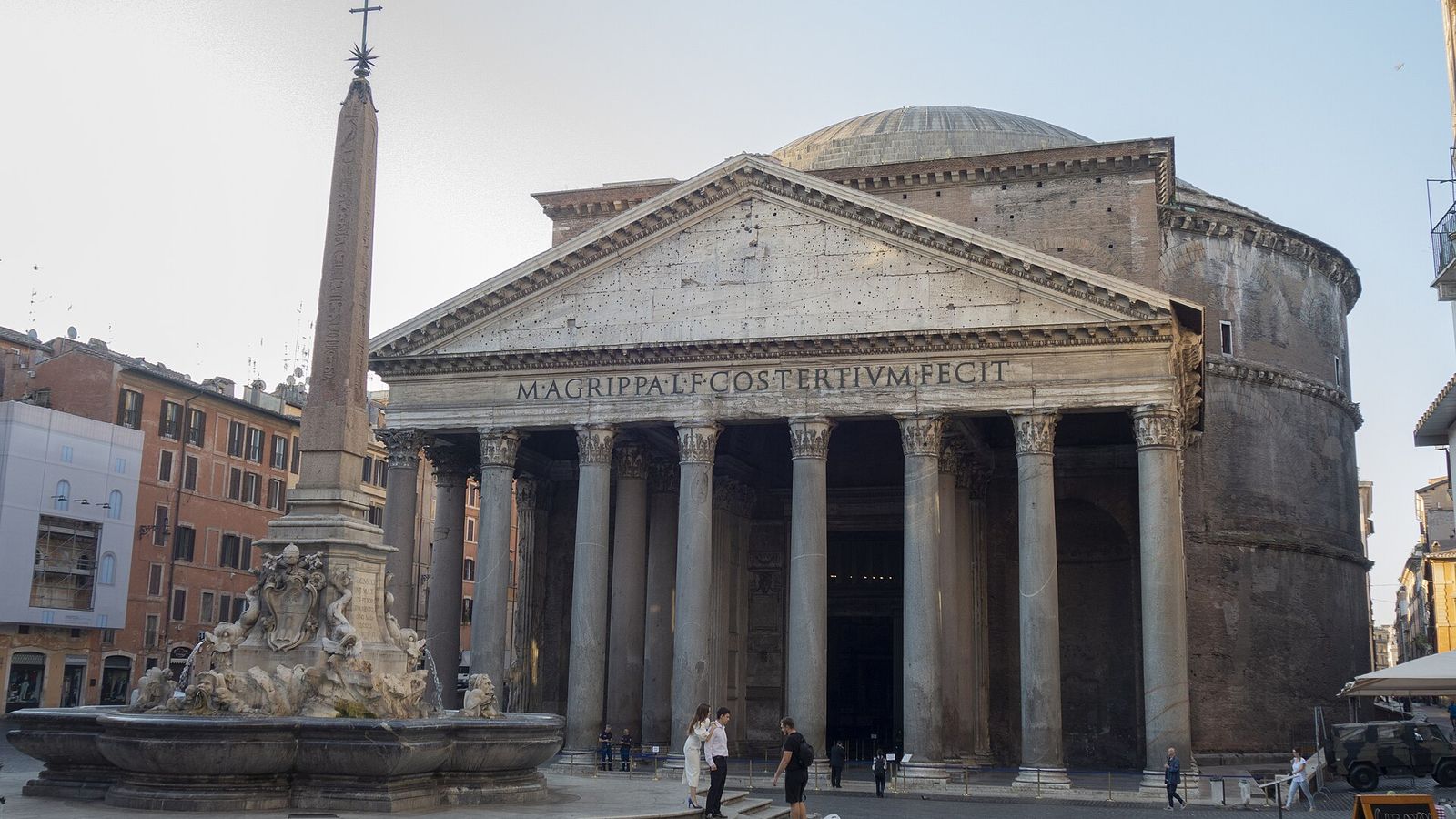
Pantheon, Rome
Photo: Nicholas Hartmann · CC BY-SA 4.0 · Wikimedia Commons
Built≈ AD 113–125
EmperorHadrian
Dome43.3 m across
Oculus≈ 8 m wide
Hear the Pantheon story, in the app's voice
A short preview. The full story plays on its own when you walk up to it with Urban Tales.
App StoreGoogle PlayFree to start · 5 languages

Three stories most visitors miss

1

The name on the front is a decoy

The inscription says Marcus Agrippa built it. He did build the first temple here, around 25 BC, but that one burned. Hadrian rebuilt it completely and kept Agrippa's name on the front, a rare piece of modesty for an emperor.

2

A dome that gets lighter as it rises

The builders mixed heavy stone into the concrete at the base and light volcanic pumice near the top, and cut the coffers to remove more weight. That's how a dome as wide as it is tall has stood for nineteen centuries without steel.

3

When it rains inside

The oculus is open to the sky, so rain falls into the building. The marble floor is very slightly domed, and 22 small holes drain the water away.
TipGo in when it's raining, or at midday on a sunny day, when the beam of light through the oculus falls on the walls. With Urban Tales running, the Pantheon's story plays as you reach the portico.

Nearby landmarks

Pantheon: common questions

How old is the Pantheon?

The building you see was completed under Emperor Hadrian, around AD 125, on the site of an earlier temple built by Agrippa.

Why is there a hole in the Pantheon's roof?

The oculus is the building's only source of natural light and lightens the top of the dome. Rain falls through it and drains through small holes in the floor.

Who is buried in the Pantheon?

The painter Raphael, and two kings of Italy, Victor Emmanuel II and Umberto I, along with Queen Margherita.