Urban Tales › Rome › Piazza Navona

Piazza Navona: the history, and the stadium under your feet

Piazza Navona is long and rounded at one end because it sits exactly on top of an ancient stadium. Here's what you're looking at, and what to listen for as you cross it.

Piazza Navona, Rome
Photo: Myrabella · CC BY-SA 3.0 · Wikimedia Commons
Stadium built≈ AD 86
EmperorDomitian
FountainBernini, 1651
Flooded in summer1652–1866
Hear the Piazza Navona story, in the app's voice
A short preview. The full story plays on its own when you walk up to it with Urban Tales.
App StoreGoogle PlayFree to start · 5 languages

Three stories most visitors miss

1

A racetrack you can still see

Domitian built a stadium here for athletic games around AD 86. When it crumbled, houses were built on its stands, so the square kept the exact outline of the track. Below the north end you can visit what's left of the stadium itself.

2

The obelisk is a Roman copy

The obelisk on Bernini's fountain looks Egyptian, but it was carved in Rome for Domitian, with hieroglyphs written for a Roman emperor. Bernini brought it here from the Circus of Maxentius on the Appian Way.

3

The summer lake

From 1652 to 1866, on August weekends, the drains were blocked and the square was flooded so carriages could splash through it and crowds could watch from the windows.
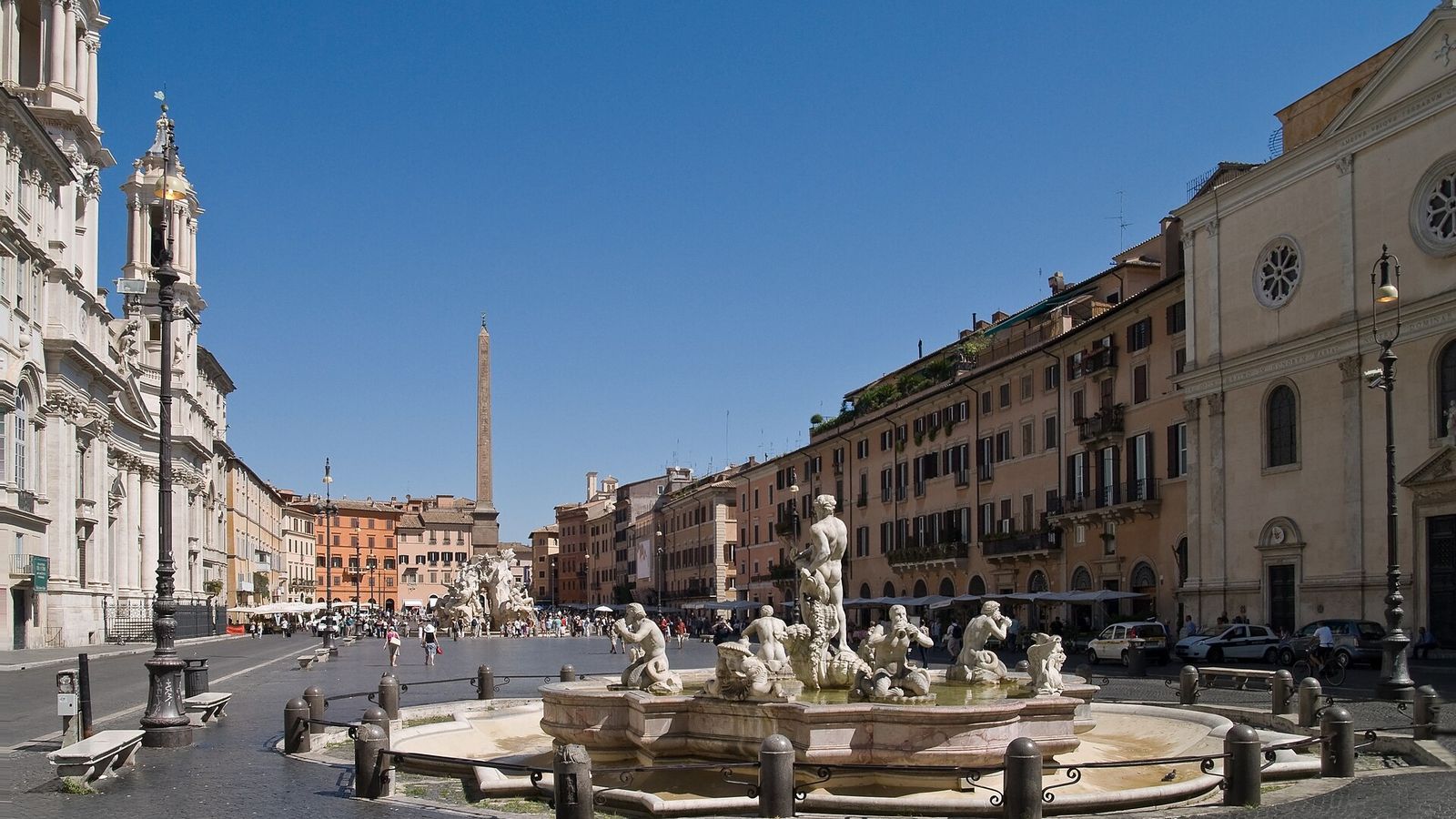
TipLook at the river god facing Sant'Agnese with his arm raised. Romans like to say Bernini made him shield his eyes from his rival Borromini's church. It's a legend: the fountain was finished before the church's facade. With Urban Tales running, the square's story plays as you walk in.

Nearby landmarks

Piazza Navona: common questions

Why is Piazza Navona that shape?

It follows the outline of the Stadium of Domitian, built around AD 86, whose stands were later turned into houses.

Who made the fountain in Piazza Navona?

The central Fountain of the Four Rivers is by Gian Lorenzo Bernini, completed in 1651. The two fountains at the ends are older, from the 1570s.

Is the Piazza Navona obelisk Egyptian?

No. It's Egyptian in style but was made in Rome for Emperor Domitian, and moved here from the Circus of Maxentius.