Urban Tales › Rome › Spanish Steps

Spanish Steps: the history, and why they're named after Spain

The most famous staircase in Rome was paid for by a Frenchman, leads to a French church, and is named after the Spanish embassy at its foot. Here's what you're looking at, and what to listen for when you get there.

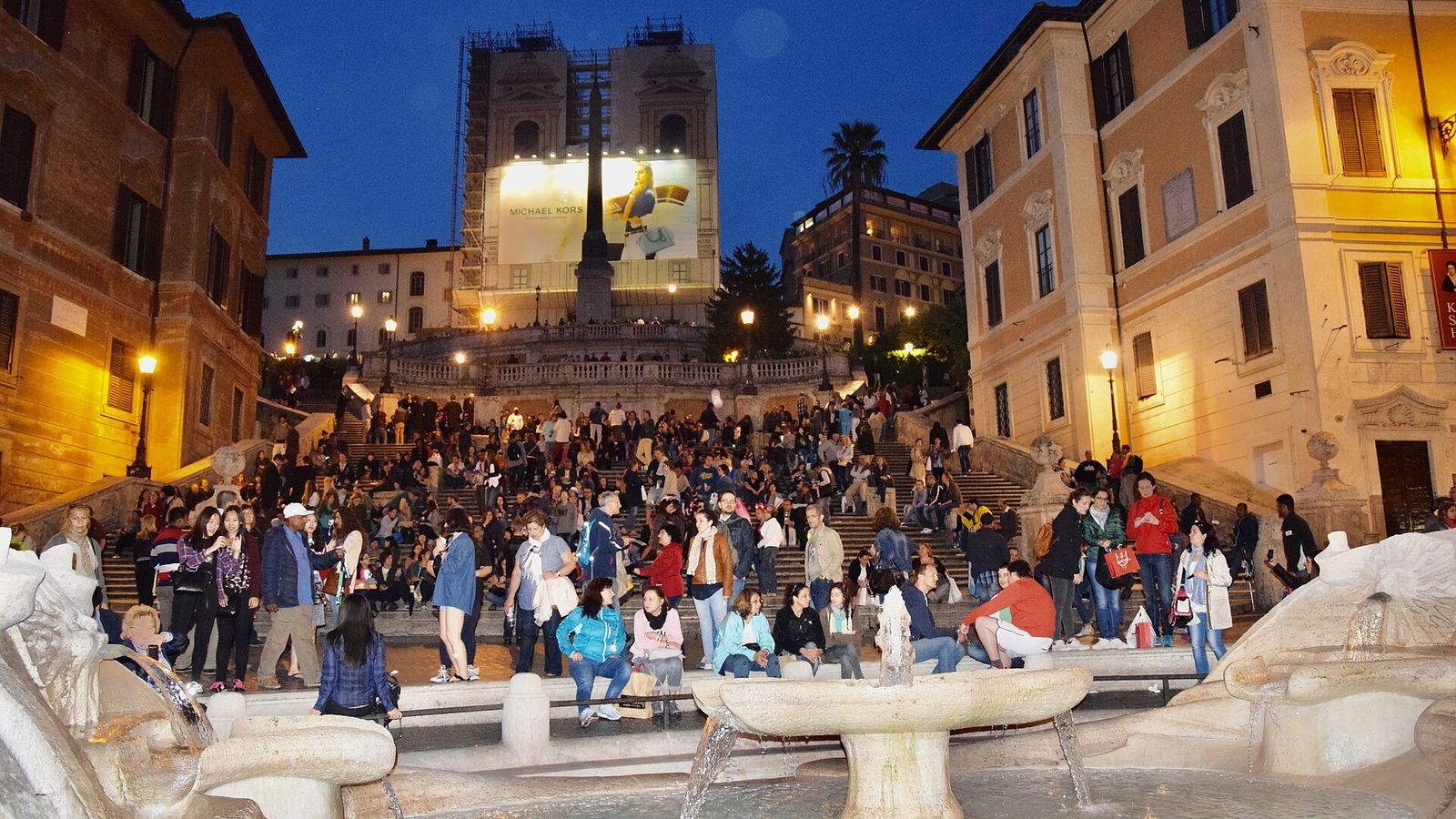
Spanish Steps, Rome
Photo: Ank Kumar · CC BY-SA 4.0 · Wikimedia Commons
Built1723–1726
Steps135
Paid for byÉtienne Gueffier
FountainBarcaccia, 1629
Hear the Spanish Steps story, in the app's voice
A short preview. The full story plays on its own when you walk up to it with Urban Tales.
App StoreGoogle PlayFree to start · 5 languages

Three stories most visitors miss

1

French money, Spanish name

The steps were funded by a bequest from the French diplomat Étienne Gueffier to link the French church of Trinità dei Monti at the top with the square below. The square was named after the Spanish embassy to the Holy See, and the name stuck to the steps too.

2

The boat that's sinking on purpose

The Barcaccia fountain at the bottom, by Pietro Bernini and his son Gian Lorenzo, is a half-sunken boat. The water pressure here was too low for a tall jet, so they made a fountain that sits low and overflows.

3

You can't sit on them

Since 2019, sitting on the steps can earn you a fine. The city brought the rule in after a costly restoration, to protect the travertine.
TipClimb to the top and look back down Via dei Condotti: the street lines up with the steps. With Urban Tales running, the square's story plays as you reach the fountain.

Nearby landmarks

Spanish Steps: common questions

Why are they called the Spanish Steps?

After the Piazza di Spagna at their foot, named for the Spanish embassy to the Holy See. The steps themselves were paid for by a French diplomat.

Can you sit on the Spanish Steps?

No. Since 2019, sitting on the steps is not allowed and can be fined.

How many Spanish Steps are there?

There are 135 steps, built between 1723 and 1726.