The wrong name
For centuries people called it the Theseion, believing the hero Theseus was buried here. It is now identified as the temple of Hephaestus, god of metalworking, which fits the foundries and potters' workshops found all around it.
Begun in 449 BC on a hill above the Ancient Agora, the Temple of Hephaestus is the most complete classical Greek temple still standing. Here's what you're looking at, and what to listen for as you climb up to it.
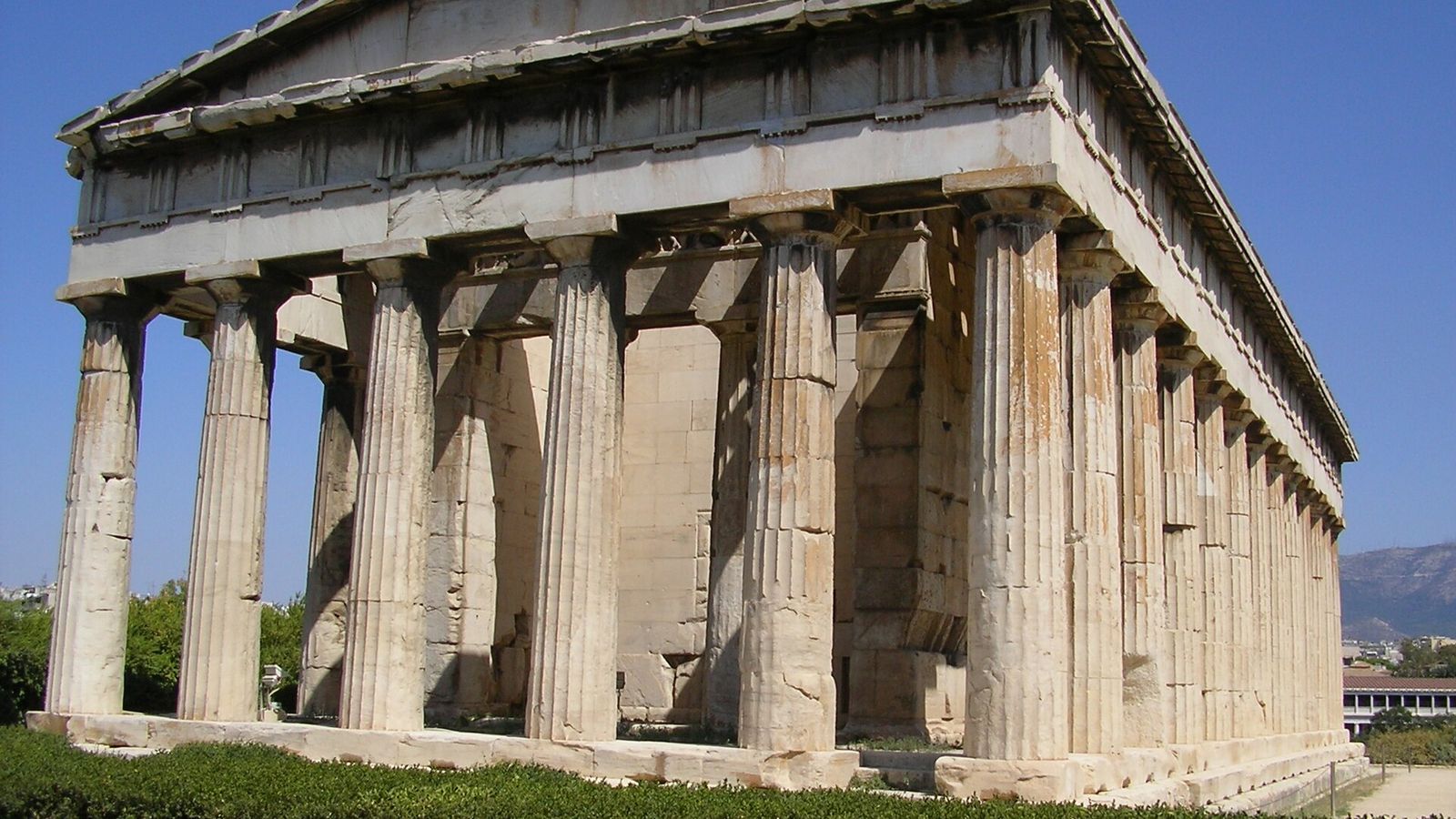
For centuries people called it the Theseion, believing the hero Theseus was buried here. It is now identified as the temple of Hephaestus, god of metalworking, which fits the foundries and potters' workshops found all around it.
From the 7th century until 1834 it was the Greek Orthodox Church of Saint George Akamates. Constant use kept it roofed and repaired while other temples were taken apart for stone.
Only 18 of its 68 metopes were carved. The ten above the east front show the labours of Heracles; the others, near the corners, show the deeds of Theseus.
It was used as a church from the 7th century until 1834, so it was maintained instead of being taken apart for building stone.
Hephaestus, god of fire and metalworking, together with Athena Ergane, patron of crafts.
Yes. It was long called the Theseion because people believed Theseus was buried there; it is now known to be the temple of Hephaestus.