Lime and cattle blood
A popular legend says pink mixed the red and white of two rival parties. The likelier answer is practical: 19th-century whitewash was often mixed with bovine blood, which helped it resist damp, and the mix turned pink.
The pink palace on Plaza de Mayo holds the president's offices. It stands where a Spanish fort was built in 1594, and its colour comes from the 1870s, not from a political compromise.
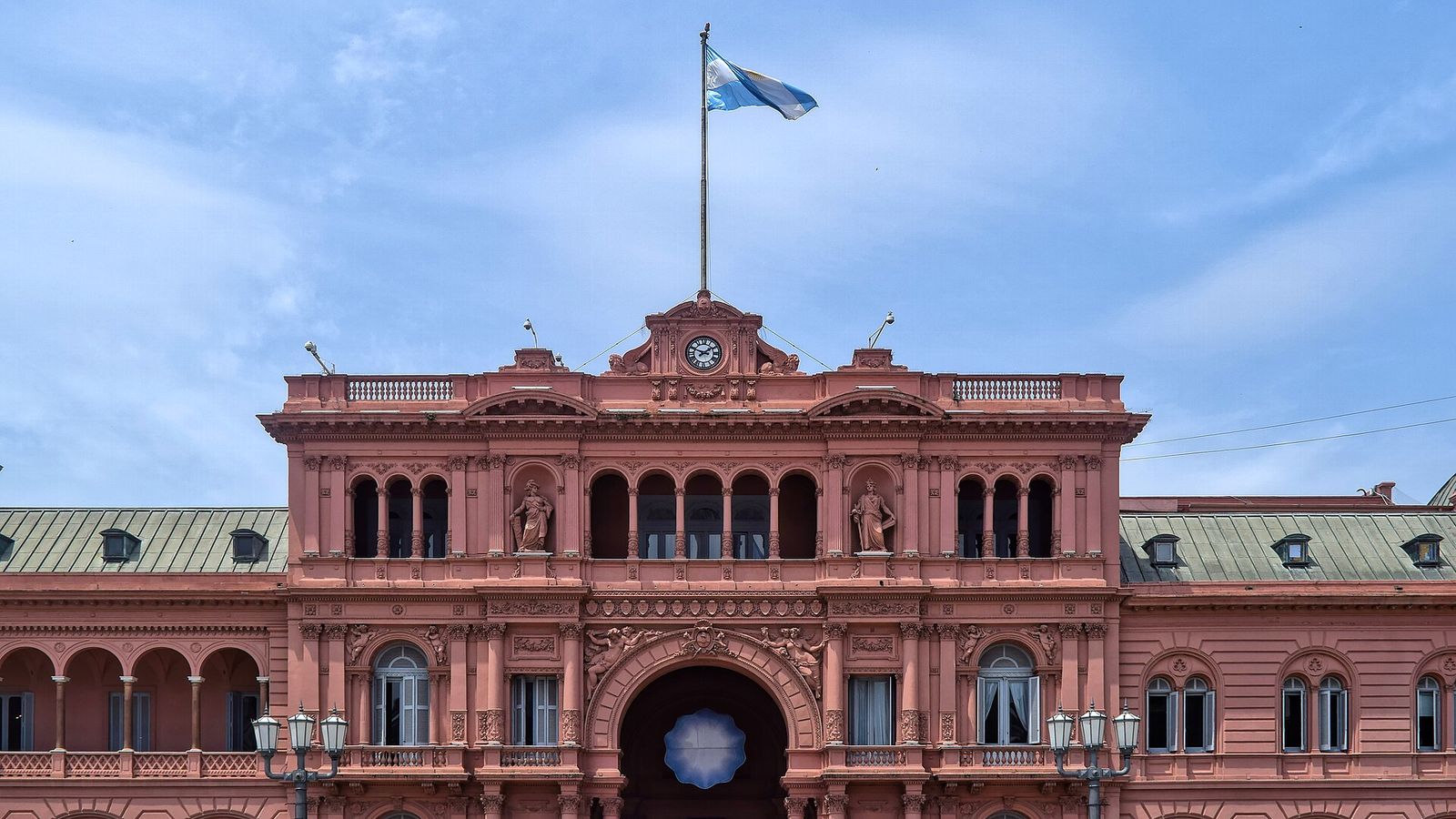
A popular legend says pink mixed the red and white of two rival parties. The likelier answer is practical: 19th-century whitewash was often mixed with bovine blood, which helped it resist damp, and the mix turned pink.
The palace is really two buildings: the old government house and a post office built next to it in the 1870s. In 1884 architect Francesco Tamburini joined them with the big central arch, and you can still spot a small mismatch where the mouldings meet.
Perón and Evita spoke to crowds from its balcony, and in 1996 Madonna sang "Don't Cry for Me Argentina" there for the film Evita.
It was painted pink in the 1870s, during Domingo Sarmiento's presidency. The usual explanation is that whitewash of the time was mixed with bovine blood to make it more durable, which gave a pink colour.
No. It holds the president's offices; the official residence is the Quinta de Olivos, in the suburbs.
Yes, there are free guided visits, usually on weekends. Check the official schedule before you go, and bring ID.