Two squares became one
For most of its history this was two squares split by an arcade, the Recova. When the Recova was demolished in 1884, the two halves joined into the single plaza you see.
Laid out in 1580 and renamed after the May Revolution of 1810, Plaza de Mayo is where Buenos Aires celebrates, protests and remembers. The Casa Rosada, the Cabildo and the Cathedral all face it.
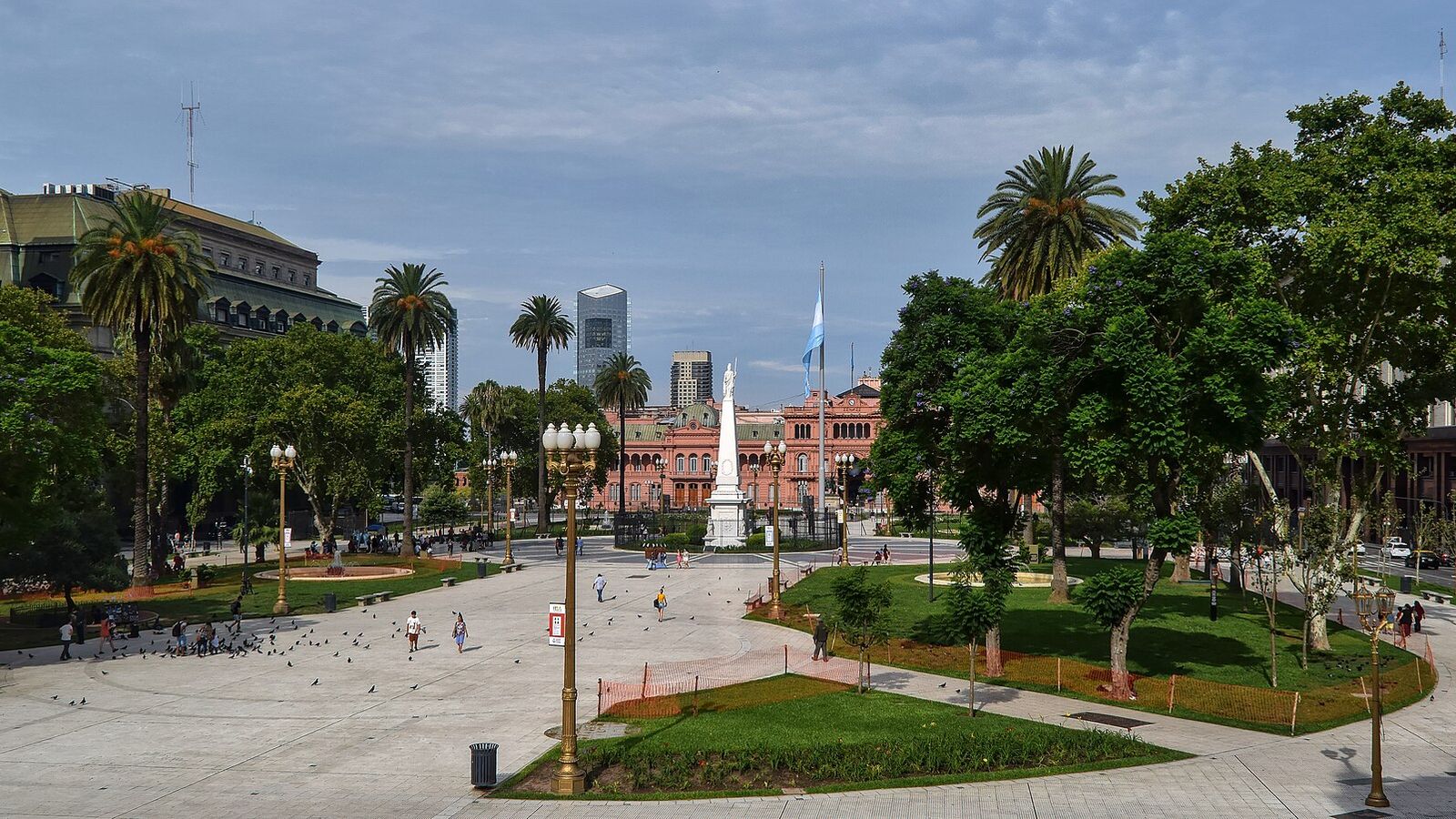
For most of its history this was two squares split by an arcade, the Recova. When the Recova was demolished in 1884, the two halves joined into the single plaza you see.
The white obelisk in the middle, the Pirámide de Mayo, went up in 1811 for the first anniversary of the revolution. It's the oldest monument in Buenos Aires.
Since 1977, the Mothers of Plaza de Mayo have walked around the pyramid to ask what happened to children who disappeared under the military dictatorship. Their white headscarves are painted on the ground around it.
It's named after the May Revolution of 1810, the week in May when Buenos Aires replaced the Spanish viceroy with its own government, the first step towards independence.
Mothers whose children disappeared during Argentina's military dictatorship (1976–1983). They began walking around the square in 1977, wearing white headscarves, and became a worldwide symbol of the search for the disappeared.
The Casa Rosada (presidential offices), the Cabildo (the colonial town hall), the Metropolitan Cathedral, and government buildings along the sides.