A gift to the city
Businessman Alberto González paid for it, about six million dollars, and commissioned Calatrava. The steel parts were made in Spain and shipped over.
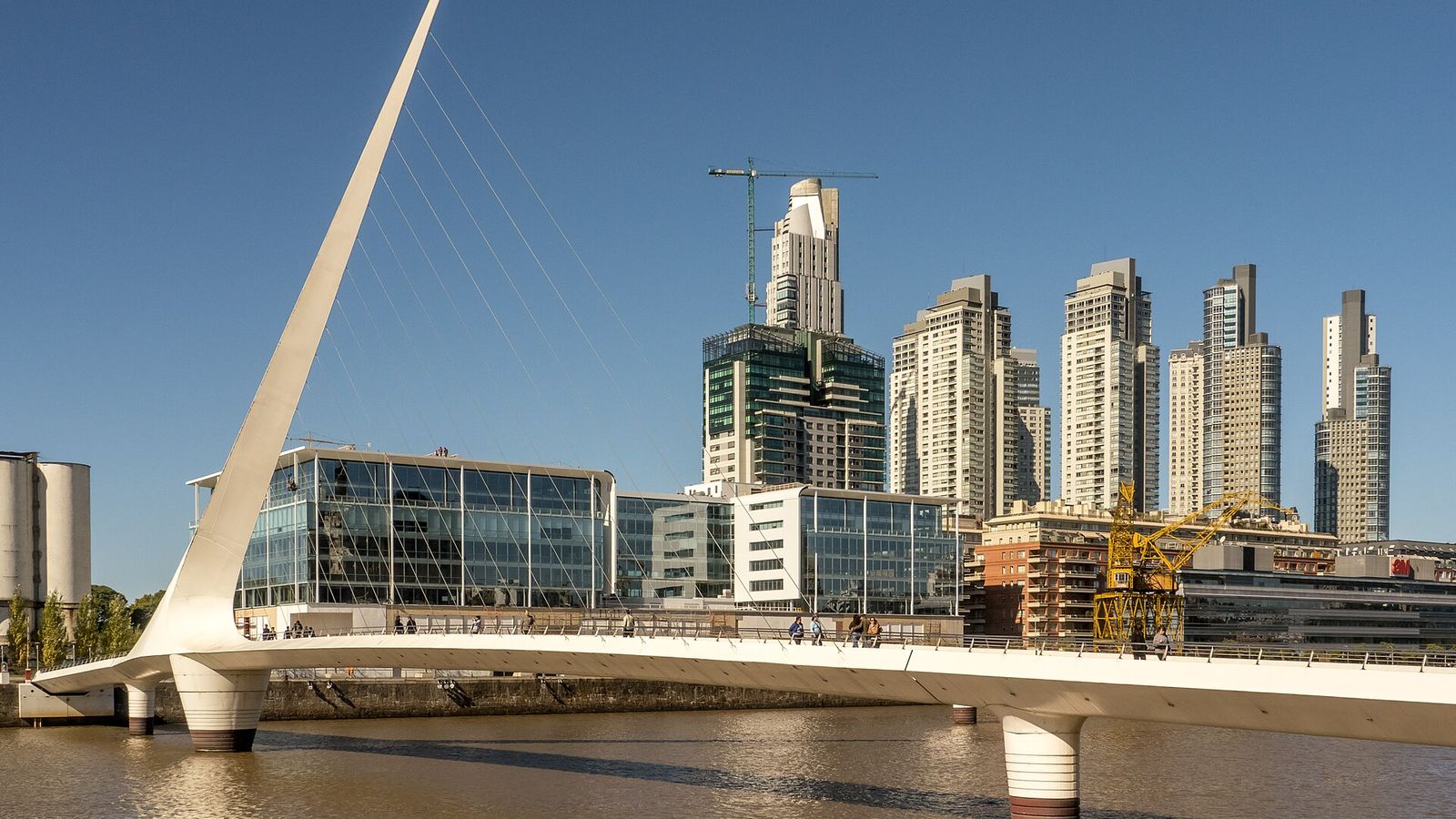
Santiago Calatrava's first work in Latin America, the Puente de la Mujer opened in Puerto Madero in December 2001. Its central span turns to let boats through the dock.
Businessman Alberto González paid for it, about six million dollars, and commissioned Calatrava. The steel parts were made in Spain and shipped over.
The 112.5-metre central section pivots on a pillar in the water, so boats can pass through the dock. The whole moving part weighs about 800 tonnes.
The slanted mast and the curved deck are often described as a couple dancing tango. The name fits Puerto Madero, where the streets are named after women.
The Spanish architect Santiago Calatrava. It was his first work in Latin America.
It's in Puerto Madero, where the streets are named after women, and its shape is often compared to a couple dancing tango.
Yes. Its central section pivots to let boats pass through the dock.