Why it curves
The street bends because it follows the bed of an old stream. From 1866 a railway branch ran along it, until the line closed in 1928 and the strip was left abandoned.
Before it was Buenos Aires' most colourful street, Caminito was a stream and then a railway line. In 1959 the painter Benito Quinquela Martín helped turn it into an open-air street museum.
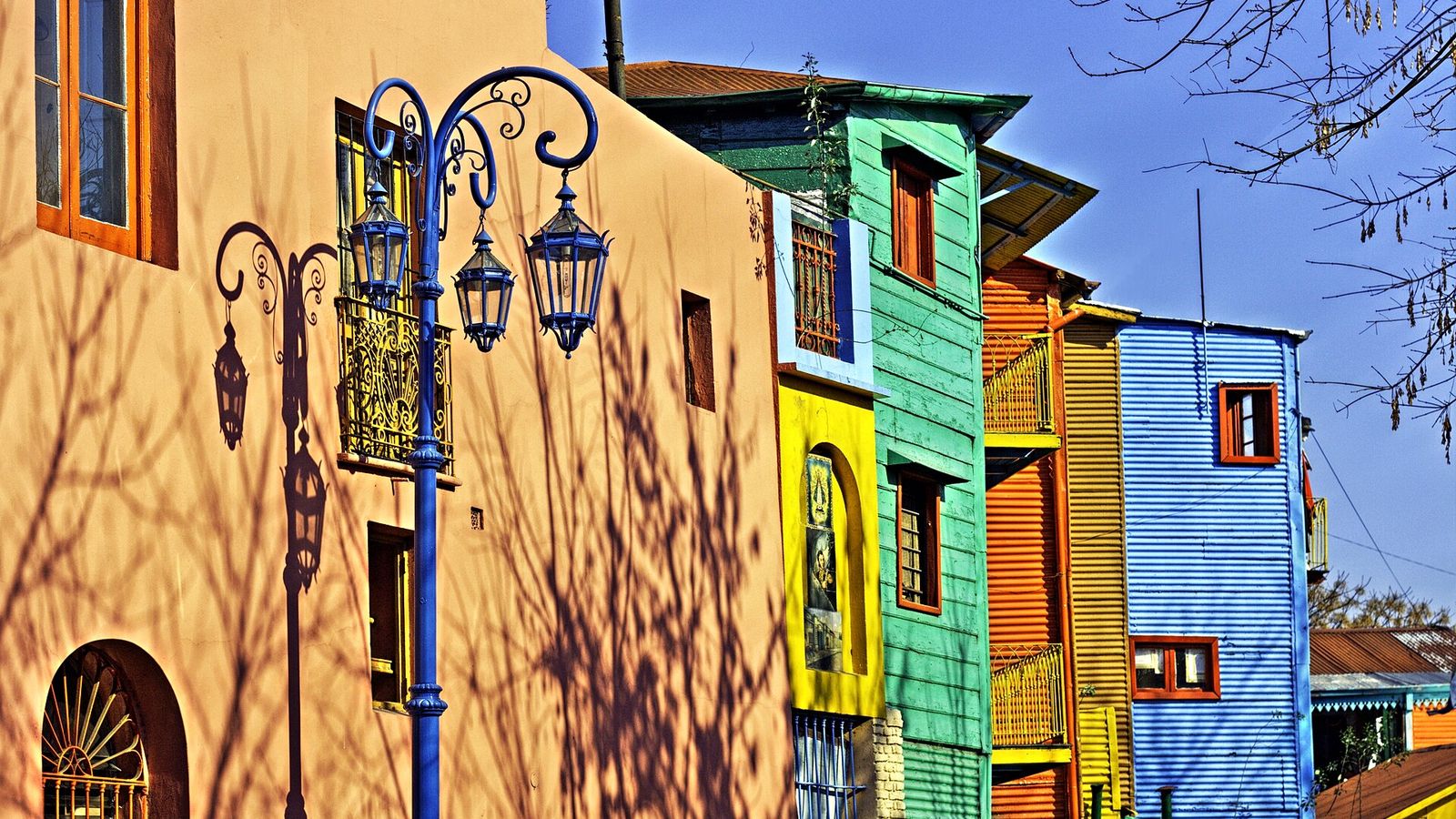
The street bends because it follows the bed of an old stream. From 1866 a railway branch ran along it, until the line closed in 1928 and the strip was left abandoned.
In the 1950s, neighbours led by La Boca painter Benito Quinquela Martín cleaned it up. In 1959 the city made it a street museum and named it after the tango "Caminito".
The houses are conventillos of wood and corrugated iron, where Genoese immigrants once lived. The story goes that they were painted with whatever paint was left over from the shipyards, so no two walls matched.
They're conventillos, simple wood and metal houses where immigrants lived. The usual story is that they were painted with leftover paint from the port, a tradition kept alive when the street became a museum.
It was named in 1959 after "Caminito", a 1926 tango with music by Juan de Dios Filiberto, who grew up in La Boca.
The street and its immediate surroundings are busy with visitors during the day. Like most tourist areas, it's best visited in daylight, keeping to the main streets.