A fortress in the water
The tower was built on a rock in the Tagus, reachable only by boat. Over the centuries the riverbank moved out to meet it, which is why it now seems to sit on the shore.
Built to guard the mouth of the Tagus at the height of the Age of Discoveries, the tower now looks like it stands on the riverbank. Here's what you're looking at, and what to listen for when you get there.
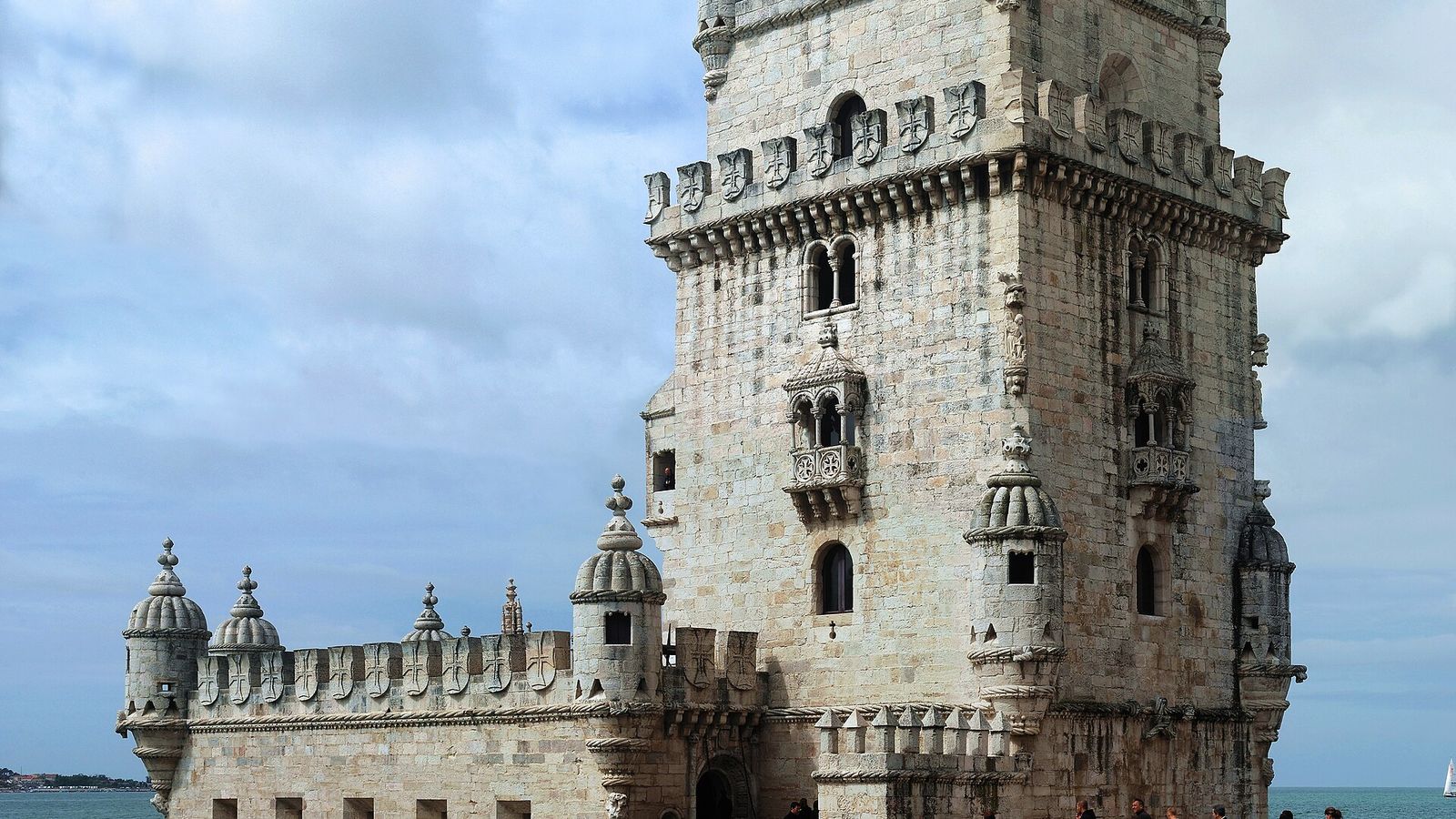
The tower was built on a rock in the Tagus, reachable only by boat. Over the centuries the riverbank moved out to meet it, which is why it now seems to sit on the shore.
Under one of the watchtowers you can find a carved rhinoceros, inspired by the rhino sent to King Manuel I in 1515. It's one of the earliest European sculptures of the animal.
Look for the armillary spheres and the crosses of the Order of Christ: they are Manuel I's emblems, carved all over the Manueline stonework.
Between 1514 and 1519, on the orders of King Manuel I, to defend the entrance to Lisbon's harbour.
Yes, on a rock in the Tagus. The shoreline moved over the centuries, so today it appears to stand on the bank.
Yes, a stone rhinoceros under one of the watchtowers, inspired by the rhino that arrived in Lisbon in 1515.