A temporary set made permanent
The first version was built for the 1940 Portuguese World Exhibition. It was rebuilt in concrete and stone in 1960, for the 500th anniversary of Henry the Navigator's death.
A caravel prow in stone on the Tagus, with Henry the Navigator leading the people of Portugal's sea voyages. Here's what you're looking at, and what to listen for when you get there.
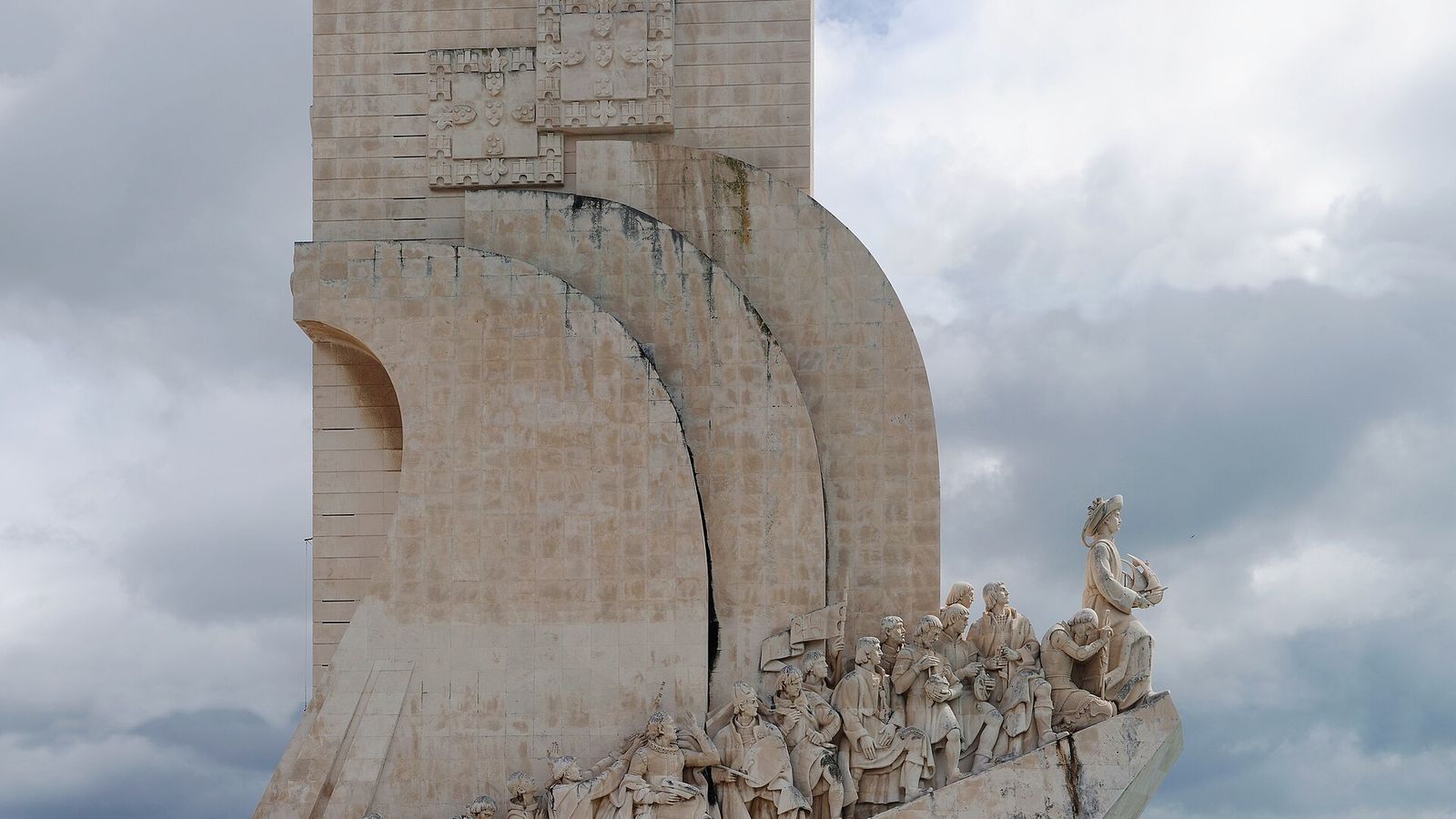
The first version was built for the 1940 Portuguese World Exhibition. It was rebuilt in concrete and stone in 1960, for the 500th anniversary of Henry the Navigator's death.
Henry the Navigator leads 32 figures of the Age of Discoveries: navigators such as Vasco da Gama, Pedro Álvares Cabral and Magellan, along with cartographers, writers and missionaries.
The giant compass rose and world map in the pavement, a gift from South Africa, mark the routes and dates of the Portuguese voyages.
A temporary version was made for the 1940 Portuguese World Exhibition; the permanent one was inaugurated in 1960.
Henry the Navigator at the prow and 32 figures of the Age of Discoveries behind him, including Vasco da Gama, Pedro Álvares Cabral and Magellan.
A compass rose and world map in the pavement, a gift from South Africa, tracing the Portuguese sea routes.